<img height="1" width="1" style="display:none;" alt="" src="https://px.ads.linkedin.com/collect/?pid=5387194&amp;fmt=gif">

The System of Action®
for the NHS

Your EPR records. DrDoctor takes action.

DrDoctor reaches patients on the channel they answer, collects what they report between appointments and acts on it automatically: booking, rebooking, validating waiting lists and routing to clinical review.

Two ways to transform how your trust runs

Let the platform lead, or co-design a new model of care with us. Your clinics run full, and the change sticks.

Core Communications: Fix how patients hear from you

The letter that lands after the appointment, or the phone line nobody gets through on. DrDoctor puts voice, SMS, letters and two-way messaging in one place, so more patients turn up.

Right for you if:

  • Your letters and SMS run on separate systems
    Digital letters, reminders and two-way messaging from one platform, with print for the patients who need it.
  • Your SMS bill keeps rising, and patients still wait on hold
    Patient communications are included as standard, so switching on the next service never adds to the SMS bill.
  • You cannot wait on an integration to get started
    Go live immediately whilst the main integration is underway.
  • Changing an appointment means a phone call
    Patients see their appointment, then confirm, change or cancel from the same link.
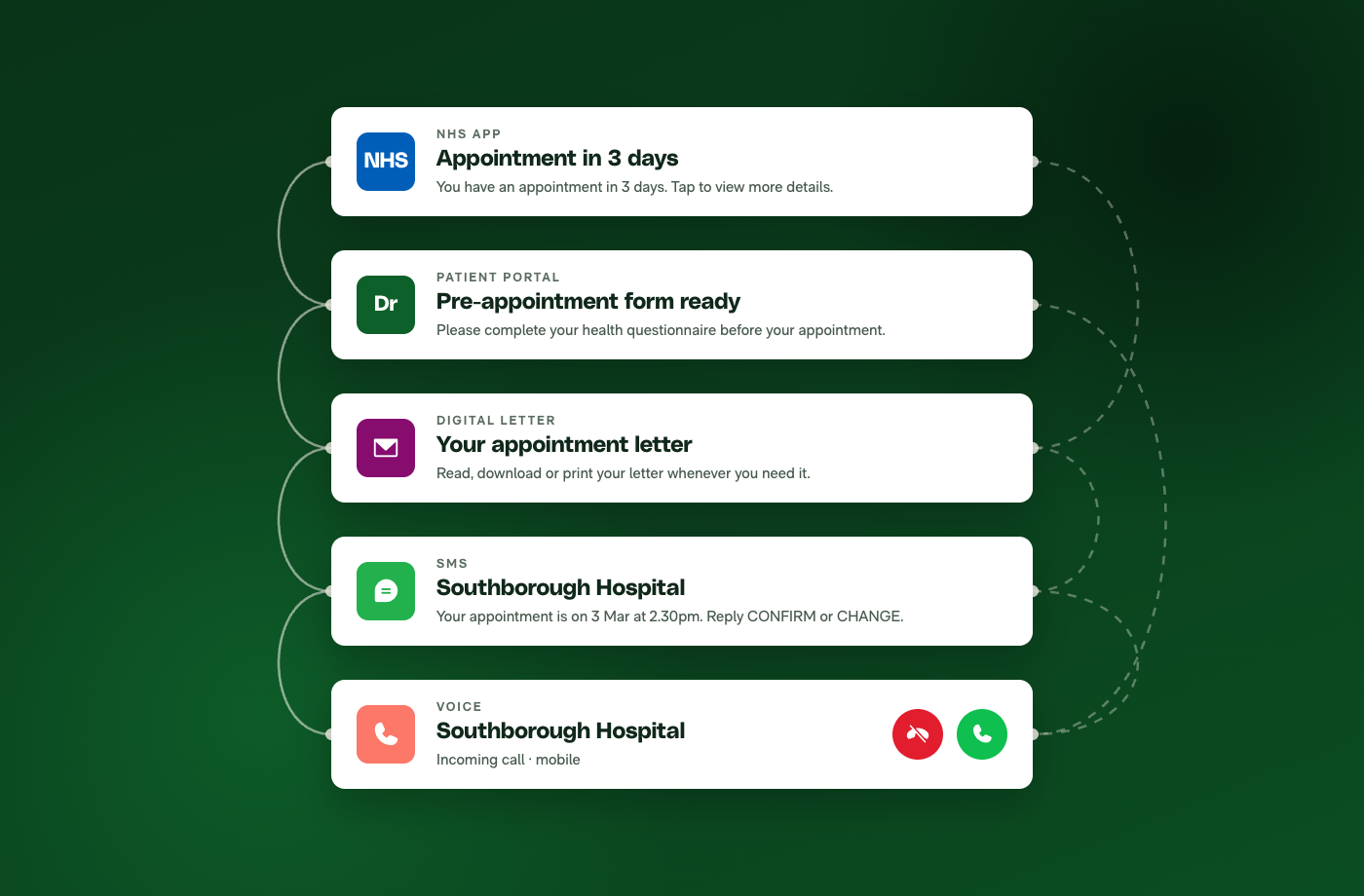
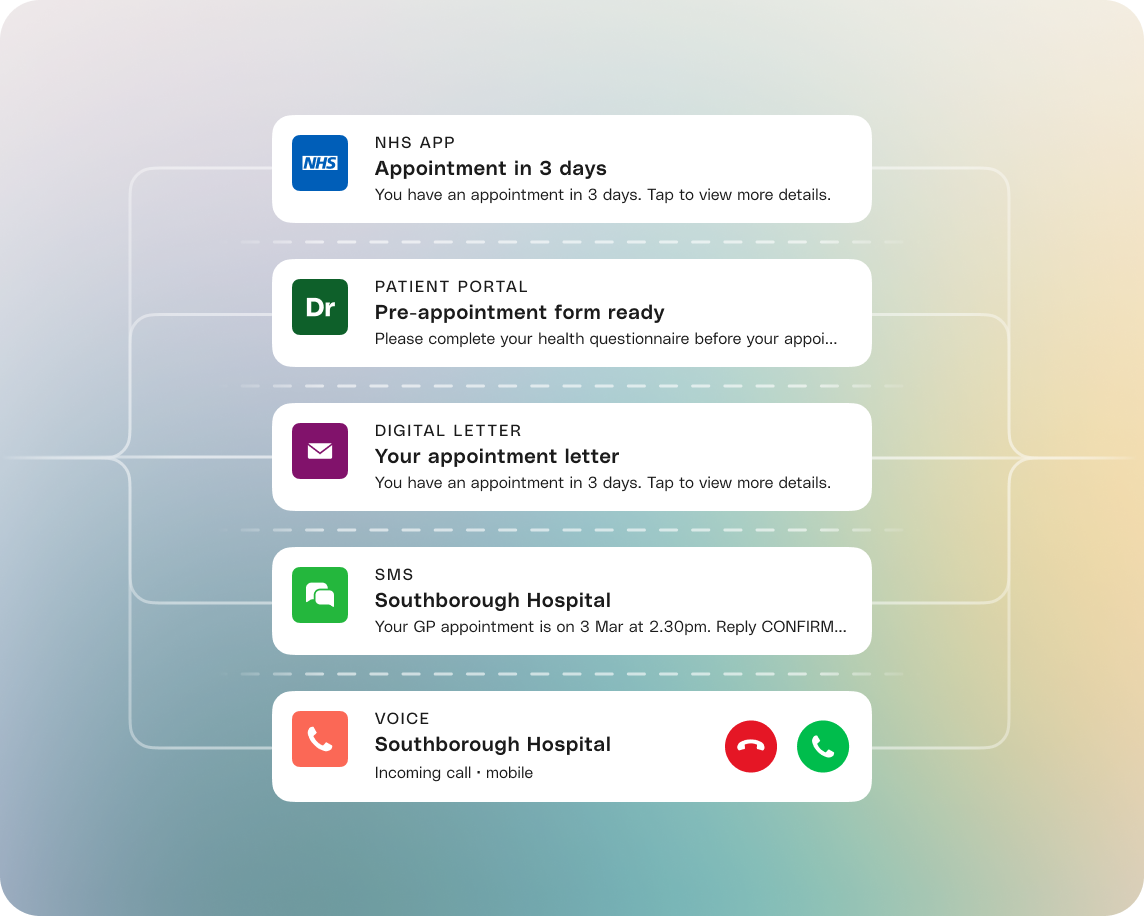
One appointment reaching a patient across five channels: NHS App, patient portal, digital letter, SMS and voice call

Delivery Partner: For the problems technology can't reach

The business case that never paid back, or the programme that faded by winter. Delivery Partner redesigns services across the trust with the people who run them, and the platform makes the change stick.

Right for you if:

  • Services are struggling, but no one can say where
    A fixed-cost discovery finds it in 6 weeks, ending in a board-ready blueprint.
  • Good work happens in pockets, but does not join up
    Clinicians, operational managers and booking teams redesign the pathway together.
  • Changes slip back once the project team leaves
    The new way of working runs in the platform every day, so it cannot drift back when attention moves on.
  • Your improvement team is already at capacity
    Delivery Partner adds the people to deliver it now and hands back the capability to keep it running.
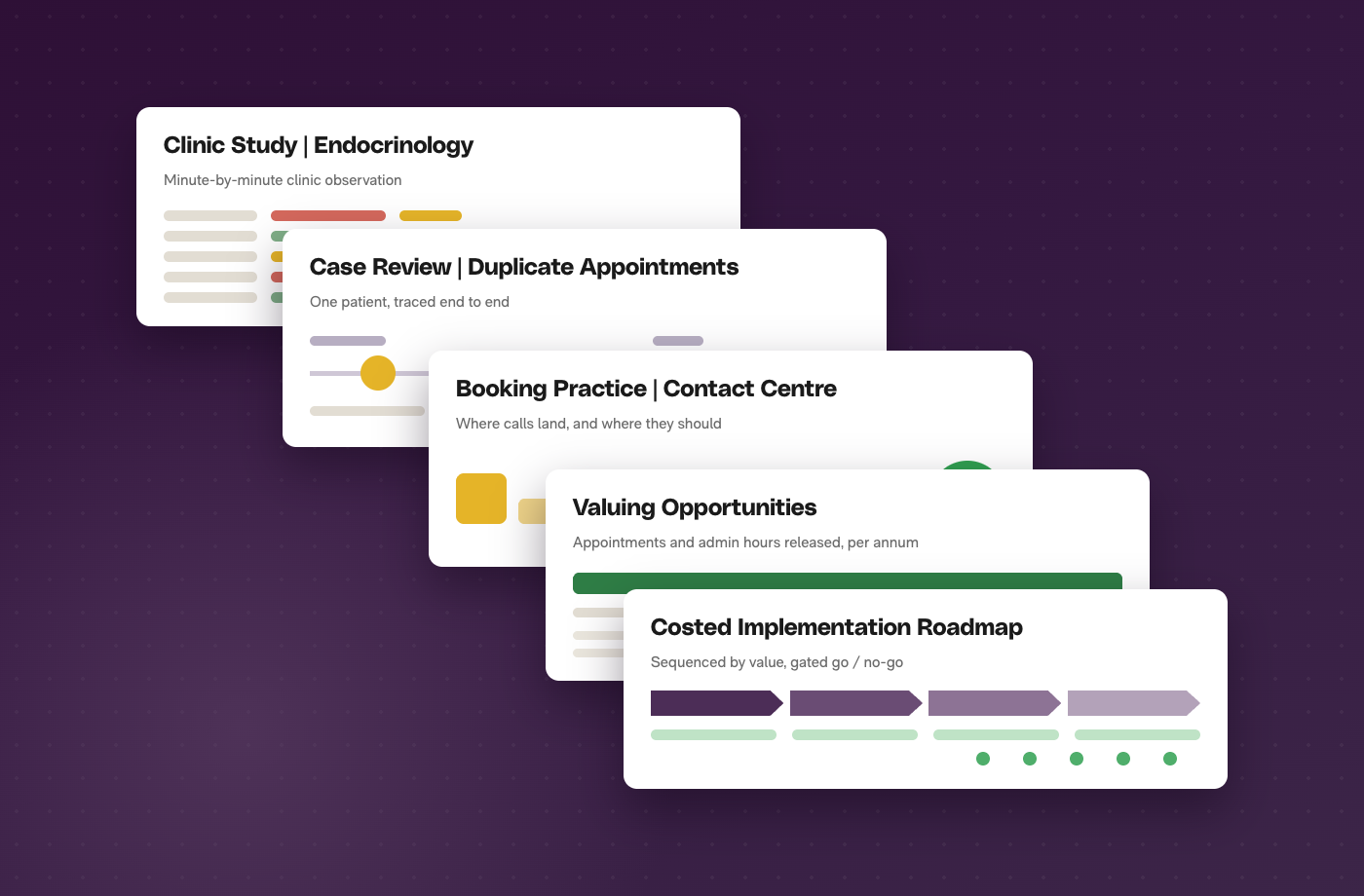
Diagnostic outputs: a clinic study, a case review, a booking practice review, valued opportunities and a costed implementation roadmap

A new model for outpatients

Responsive care follows the patient, not the clock

Instead of recalling every patient at three, six and twelve months, responsive care keeps watch between appointments and brings them in when they need to be seen. All orchestrated by the System of Action®.

One patient, twelve months

An illustration: same patient, same change at month 8.

Today

The clock runs the clinic

Follow-up appointments booked at 3, 6 and 12 months. The first two find no change. Their condition changes at month 8 and they wait for the next follow-up, which finds it at month 12: three appointments, problem found at month 12.

  1. Follow-ups booked by the calendar, not by need

  2. Clinic time spent on appointments that change nothing

  3. Patients chase the hospital for updates

  4. Booking and admin split across several systems

  5. Problems found late, at the next appointment

With responsive care

The patient runs the pathway

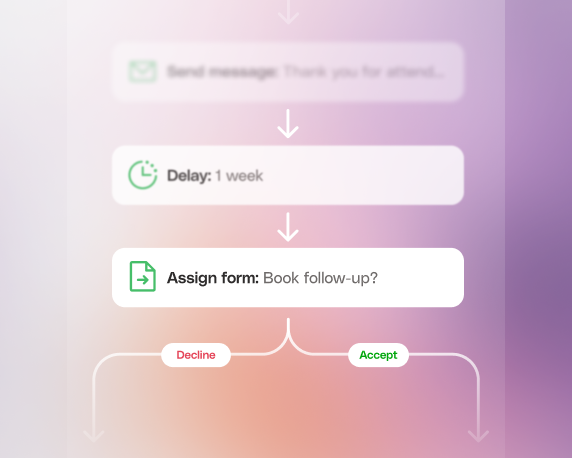
The same patient sends data along the way, so each follow-up slot is freed for another patient. Their data shows the change at month 8 and triggers a follow-up: one appointment, problem found at month 8.

  1. Follow-ups triggered by clinical need and patient data

  2. Clinic time goes to the patients who need it

  3. Patients see where they stand and act on it

  4. Booking, messages and forms in one platform

  5. The service hears about it when something changes

WHAT YOUR TEAMS CAN DO

Everything from first contact to follow-up, from one place

Responsive care needs booking, messages and monitoring working together.

Modern day scheduling for a modern NHS

Keep clinics running full with automated scheduling

Patients confirm, cancel and rebook into live slots. Where the integration supports it, the change goes straight back to your PAS or EPR.

How it works

Your system of record, our system of action

Your EPR records what has happened. DrDoctor acts on what happens next.

Holds the appointments, referrals and patient records DrDoctor works from.

INTEGRATIONS

Answers land where your team looks

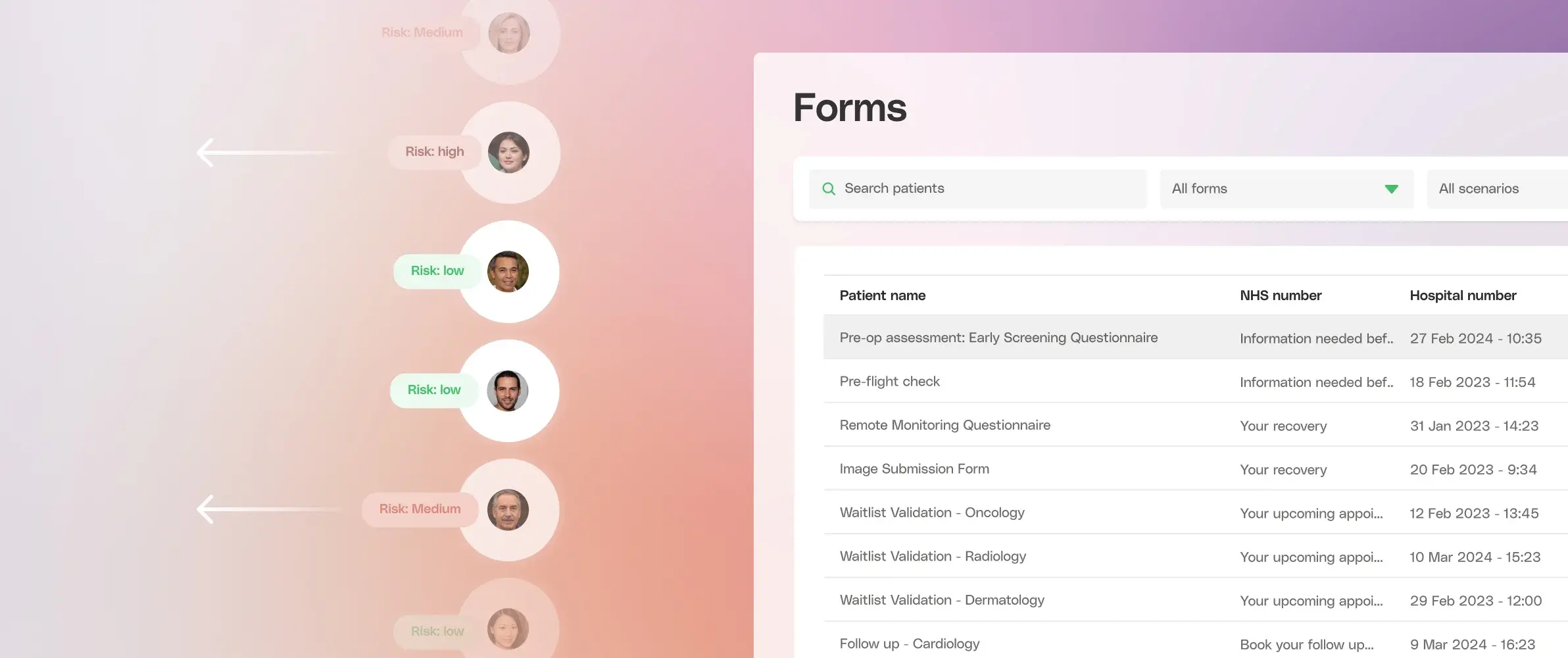
Where the integration supports it, a form that comes back lands in the record, not in a portal somebody has to remember to open. Pre-built adapters mean less work for your team.

Image - Hybrid Healthcare 5

Wherever care happens, patients hear from you

Acute, community, mental health and integrated care each run a different week. DrDoctor fits the contact to each one, from the first reminder to the follow-up.

Hospital-1
Acute

Most of an acute trust's week is contact made by hand. DrDoctor takes it on across your outpatient services, so fewer slots go empty.

brain-1
Mental health

DrDoctor collects questionnaires before the appointment rather than in it, and moves the appointment when the date stops working.

ranking
Community services

From MSK to midwifery, DrDoctor confirms, reminds, asks and rebooks for every service, whether the appointment is in a clinic, a hub or a home.

tree-structure
Integrated care

Each trust in your system contacts patients its own way. DrDoctor is one platform across all of them, set up for each organisation.

Built in the NHS, used across it

Trusts use DrDoctor to reach patients, fill clinics and keep waiting lists current.

166m+
Appointments managed
35m+
Patients using DrDoctor
70+
NHS trusts and health boards

We take care of what happens next