Our platform reminds patients, takes their answers and moves the appointments they cannot make, so fewer slots go empty and your team handles only the exceptions.
THE PROBLEM
Patients want to attend, things just get in the way
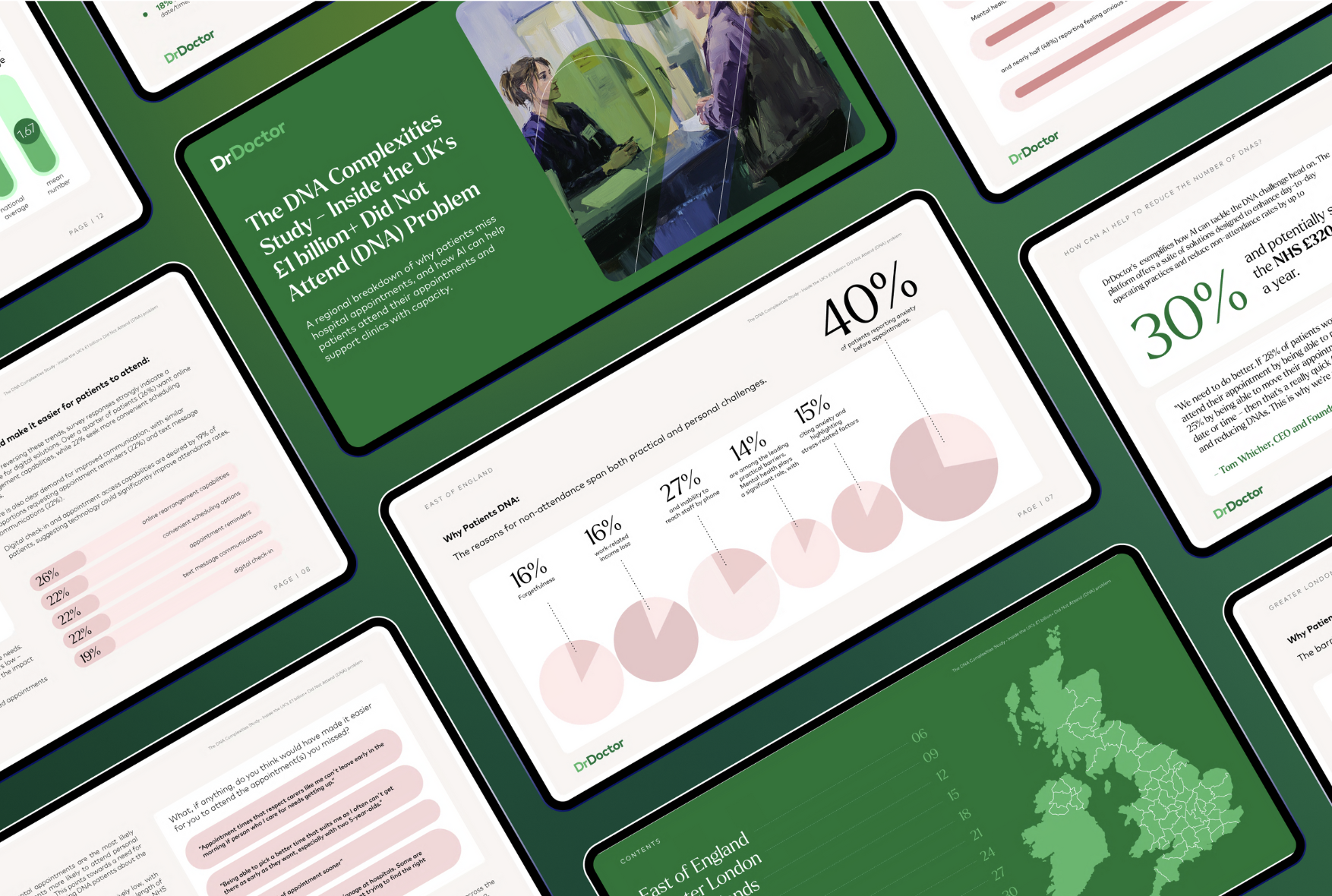
In our Censuswide survey of over 5,000 UK adults who had missed more than one NHS hospital appointment, 93% had wanted to attend.
- No easy way to move
- Patients who cannot make a time ring and wait, or say nothing and miss it.

- Too many to ring
- Booking teams cannot call every patient, so the calls go to whoever is next.

- Booked too far out
- Follow-ups booked months ahead by the calendar, whether or not they are still needed.
.svg)
OUR RESEARCH
Nearly half who miss once, miss again
We asked 5,003 people who had missed an NHS hospital appointment what got in the way, and 46% had missed more than one (Censuswide, September 2024). The report breaks it down region by region.
BOOKING AND REBOOKING
Change the appointment instead of missing it
In our survey, 29% of patients who missed an appointment had tried to rearrange but could not get through by phone. These three close that gap.
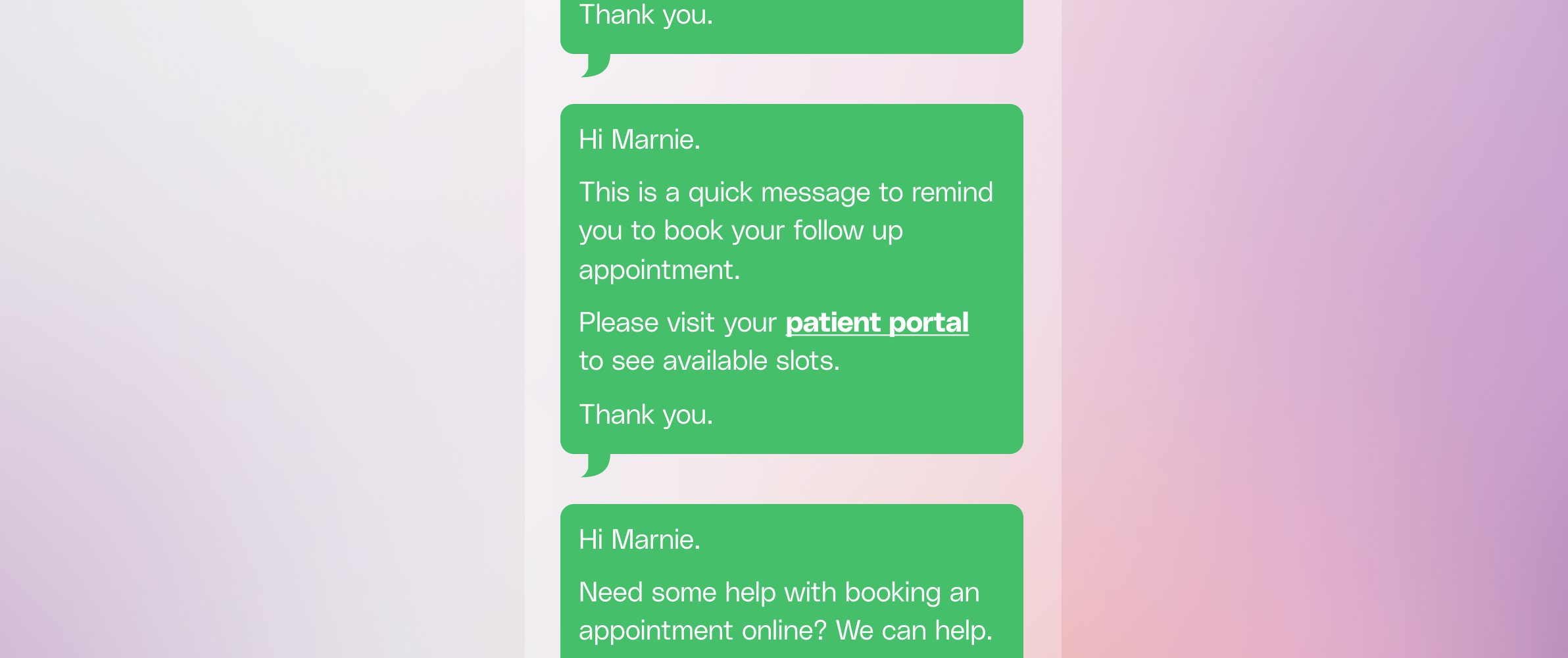
Change it from SMS
With Core Communications, patients confirm, change or cancel from the message, and the request lands in a worklist, not a phone queue.
Book into a live slot
With Scheduling Suite, patients book and rebook into live slots from your EPR, and where the integration supports it nobody rekeys the booking.
Follow up when it is needed
With Pathway Transformation, forms and PIFU mean a follow-up happens when what the patient reports calls for it, not because six months have passed.
THE EVIDENCE
Reminders cut DNAs
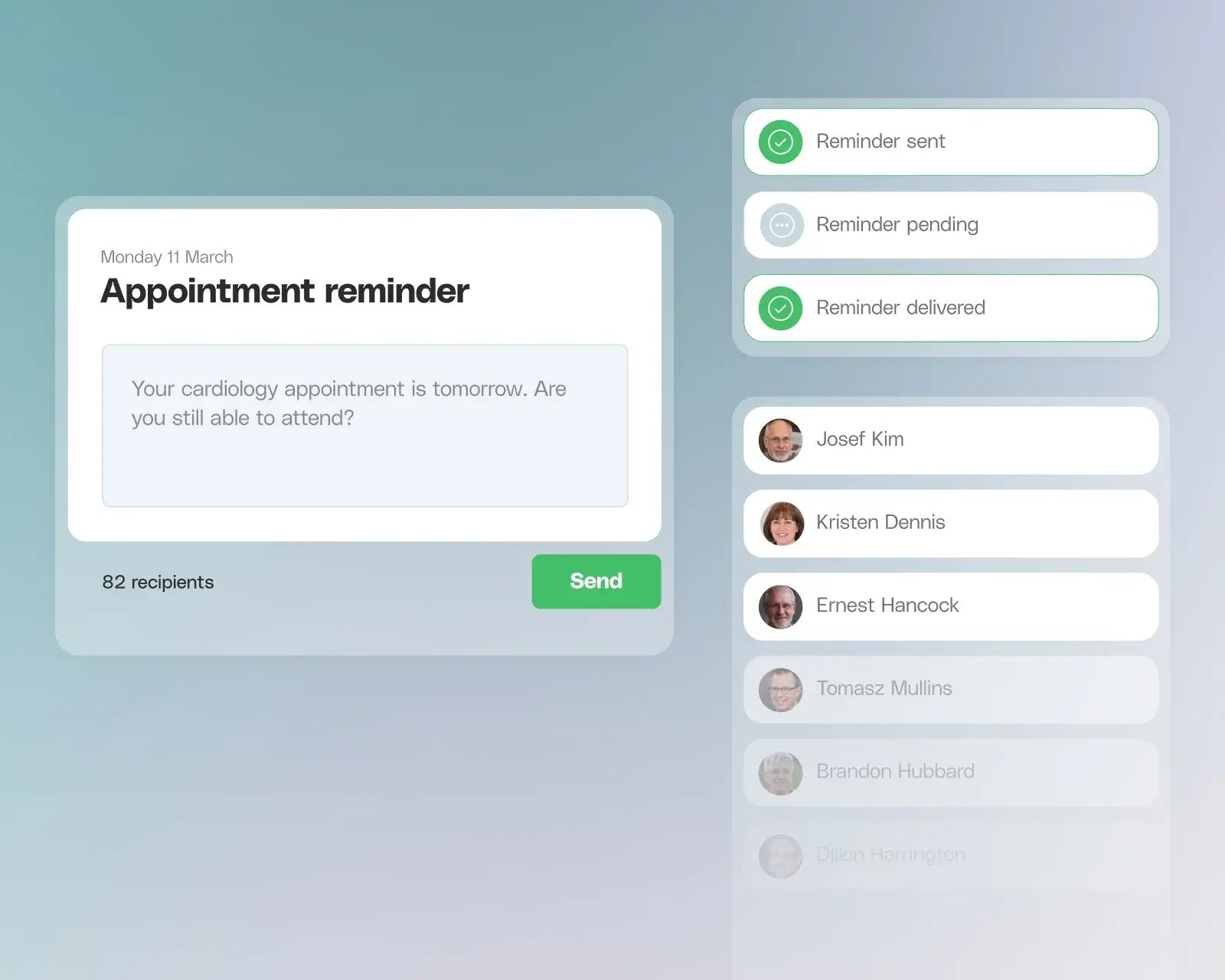
Reminders go out on the NHS App, by SMS or by email, timed to each service. The DNA rate steps down almost as soon as they're switched on.
WHERE THE EFFORT GOES
Ring the patients most likely to miss first
Not every patient needs a call, and no team could make them all, so the calls go where they can save a slot.
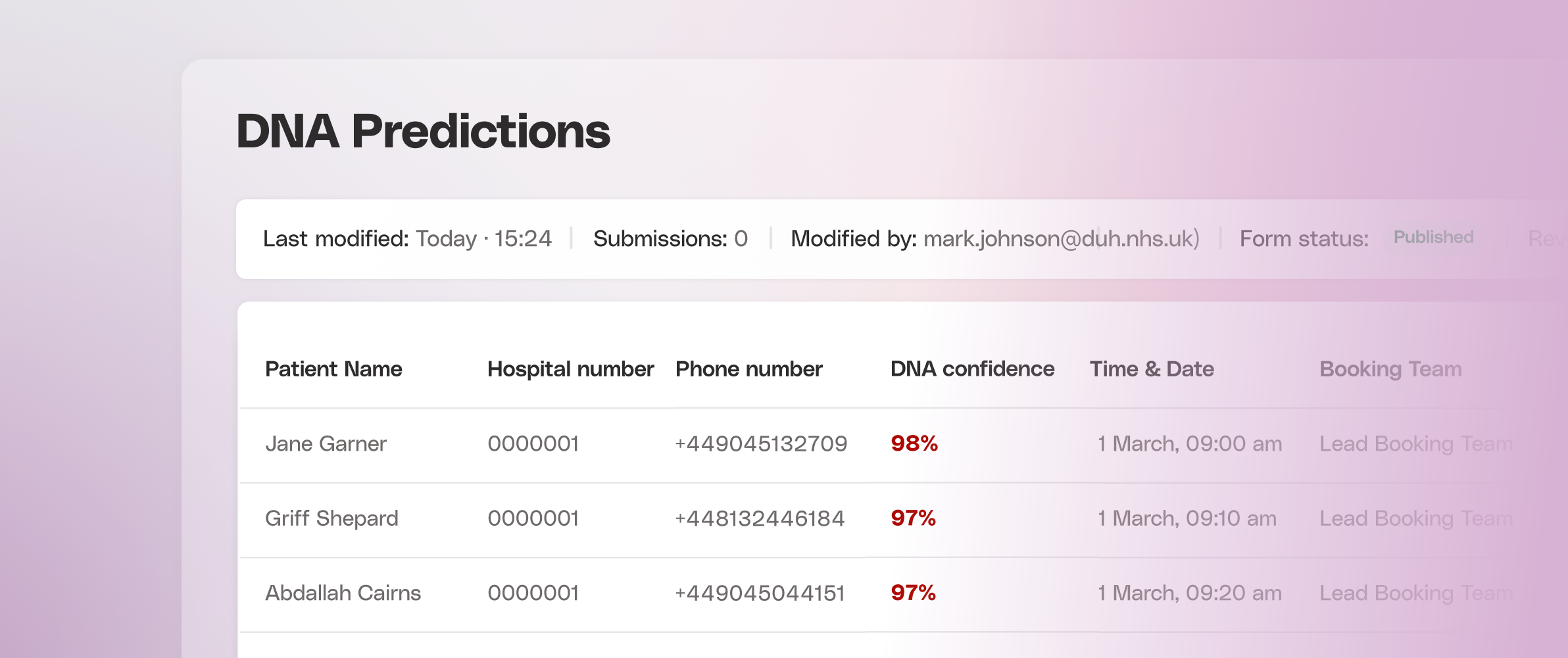
Know who to ring first
Smart Centre's DNA Prediction ranks patients by how likely they are to miss, and Clinic Optimiser shows how many more a clinic can take.
Calls your team does not make
Voice Agents book, reschedule and answer routine questions by phone, inbound and outbound, in the patient's own language.
Message the rest again
Your team rings the patients most at risk first, messages the others again and sees which clinics have room to take more.
WHAT CHANGES
Six things change when the chasing runs on its own

Confirmations you can act on
When a patient confirms, your team knows rather than assumes. The ones who stay quiet become a work list.

Clinics can move in one go
When a list moves, every patient hears at once and the replies come back to one place.

Post where it is needed
A digital letter goes to post after a set number of days, and straight away when the clinic is close.
Calls only for exceptions
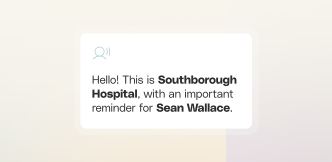
Your team rings the clash, the flag and the patient who needs a person, not the whole list.
A start from a patient list
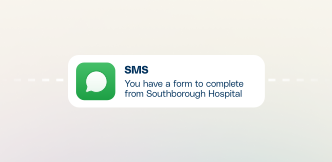
Communications work from a patient list, so a service can start while the integration runs alongside.
Live from the first week
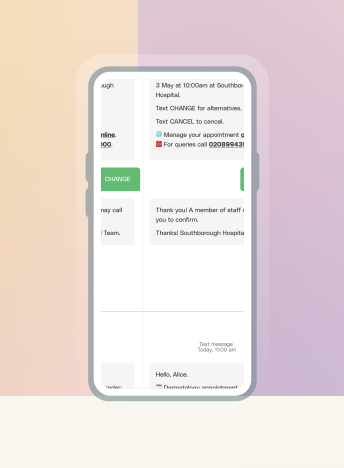
Broadcasts, validation questions and booking without integration can go live in week one.