The invitation is the part a national service already does well. What happens in the weeks after it is usually a local team with a list and a telephone. With us, that changes.
Three things cost you uptake, and none of them is willingness
Most programmes treat low uptake as a persuasion problem and spend accordingly. The public's willingness is not usually what is missing. Three much duller things are.
- The record decides who you can reach
- Contact details sit in the local record, not with the programme sending the invitation. Where the record is blank, no system reaches that person.

- Most people do not reply first time
- Reminders and second attempts go out without anyone chasing. Whoever still has not answered shows up as an exception your team can see.

- Some people must stay on paper
- At Salford Royal, national screening services, patients at risk and patients in prison or the armed forces stay off digital routing.

AFTER THE INVITATION
The chasing runs from one place
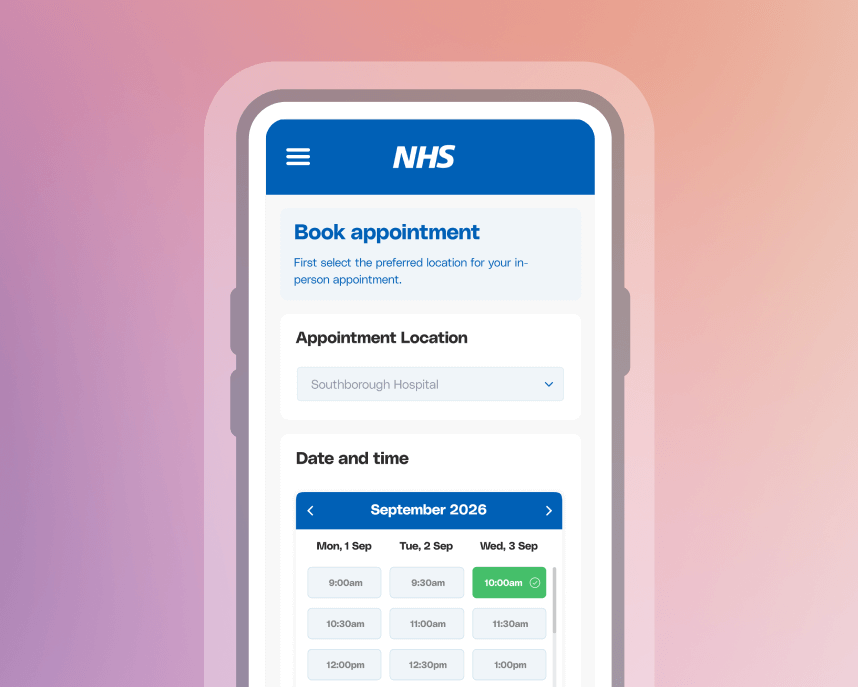
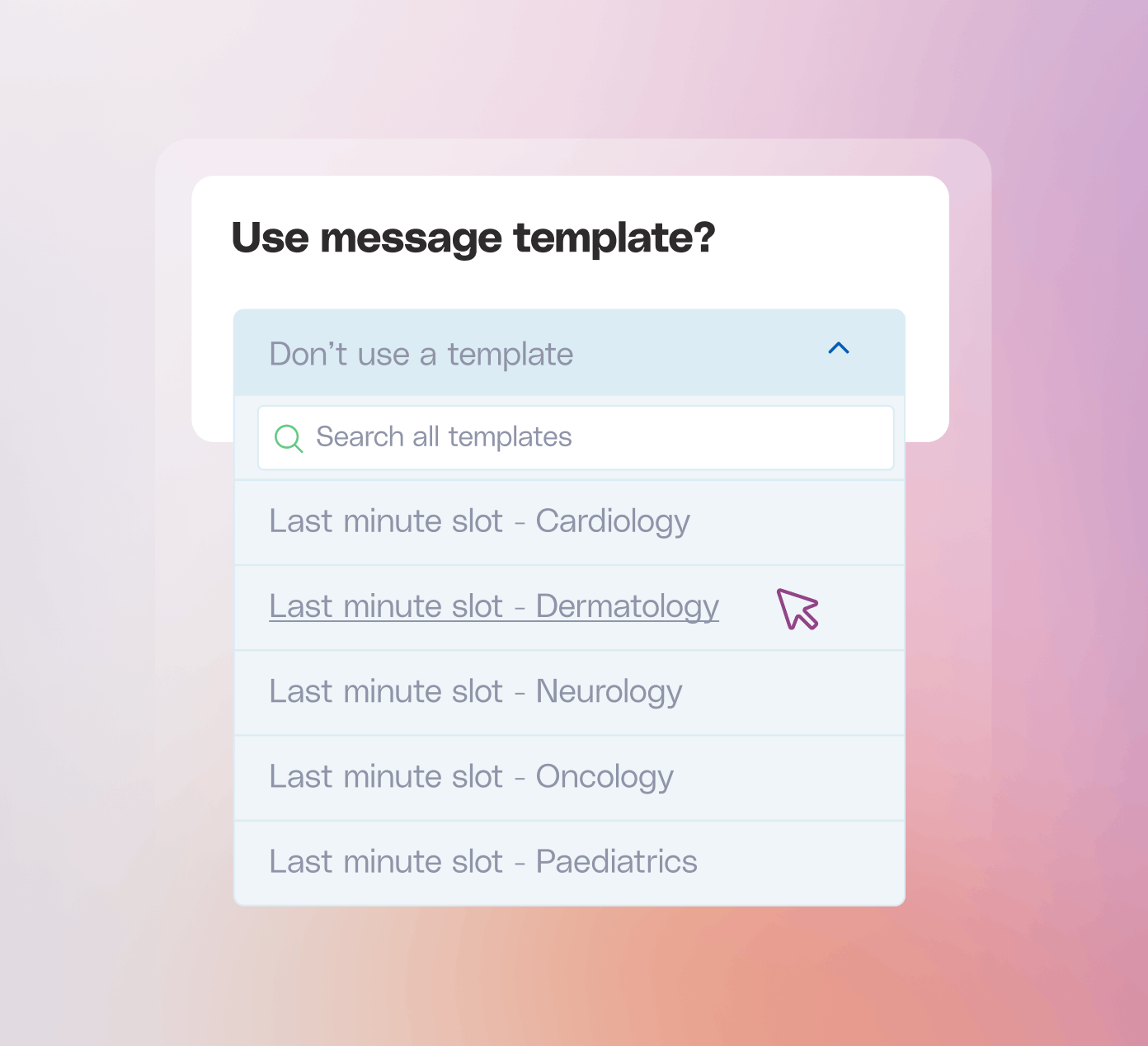
Reminders, booking and the questions a service needs all run centrally, on your programme's timings. It is the same work whether the programme is screening, a national coordination unit clearing waiting lists, or a specialised service recalling people for review.
CHANNELS
Being in the NHS App is not the same as being read
In the two years to August 2026, more than 98 million messages went to patients through the NHS App from DrDoctor. Over the same period people opened a letter 75.6% of the time however they were told about it, and 54.7% of the time when they were told in the App.
ALL CHANNELS, ONE PLACE
Core Communications
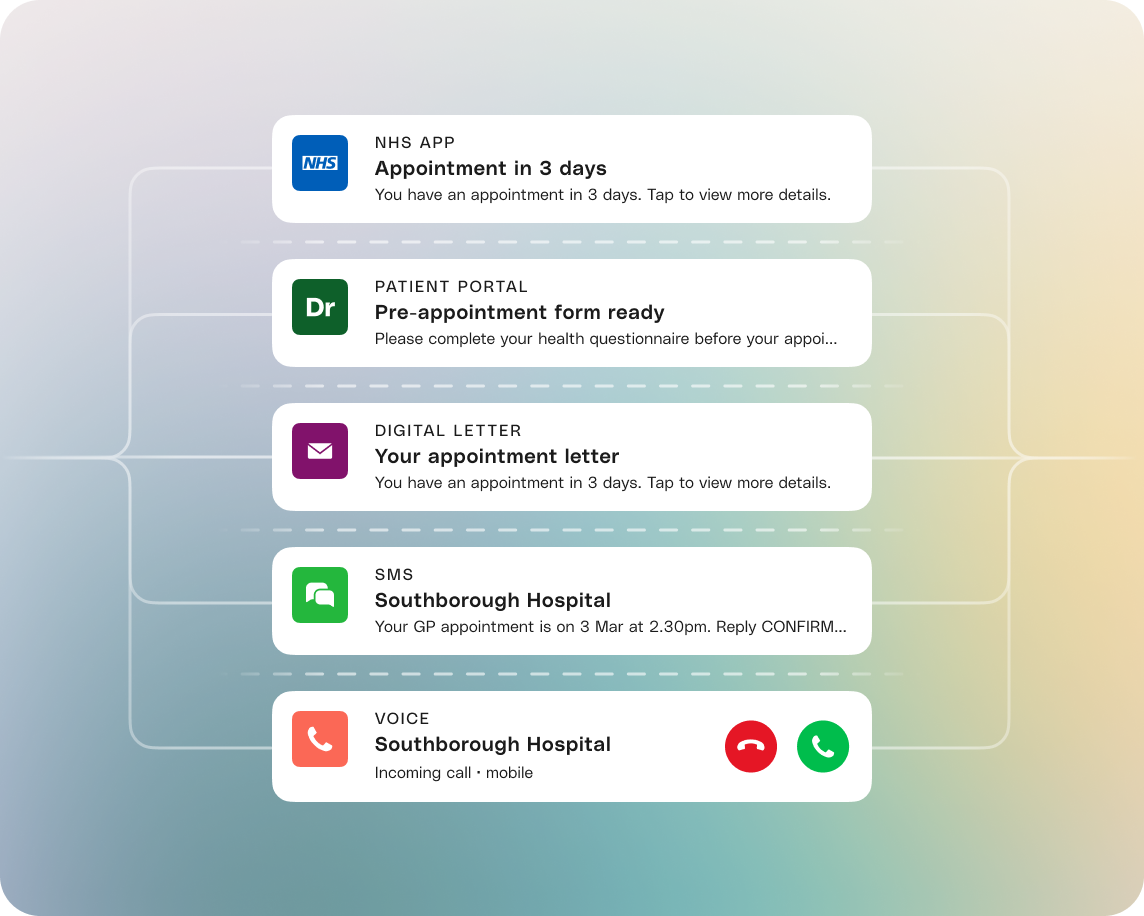
Appointment viewing, reminders, digital letters, messaging and confirmations, opened from a text link with nothing to download and no password.
APP FIRST, PAPER LAST
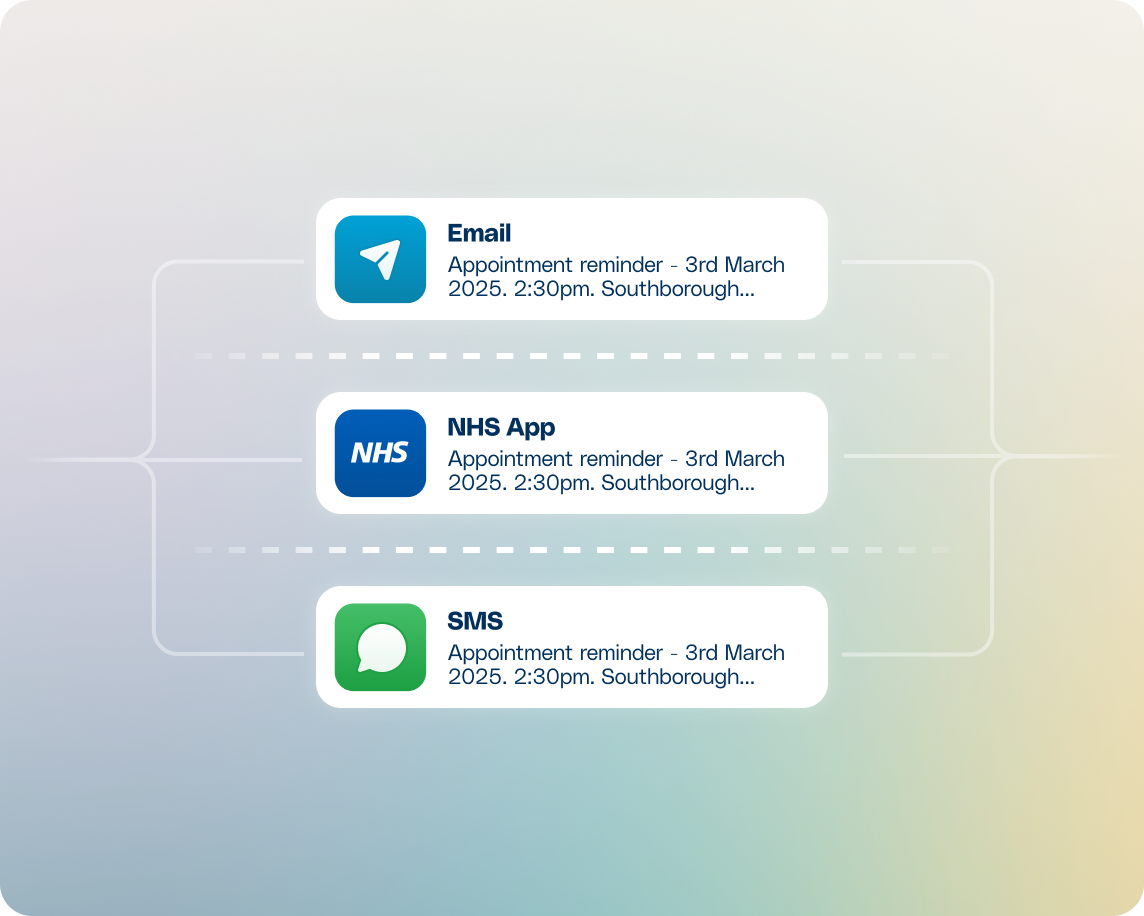
NHS App first, then text
Where an organisation has it set up, the message goes to the App first, with text after and paper next. Where it does not arrive, a text goes instead.
WHEN TEXT CANNOT REACH
Voice Agents
A voice agent that books, reschedules and answers routine queries by phone, inbound and outbound, in the person's own language.
Admin runs itself. Clinical waits for you
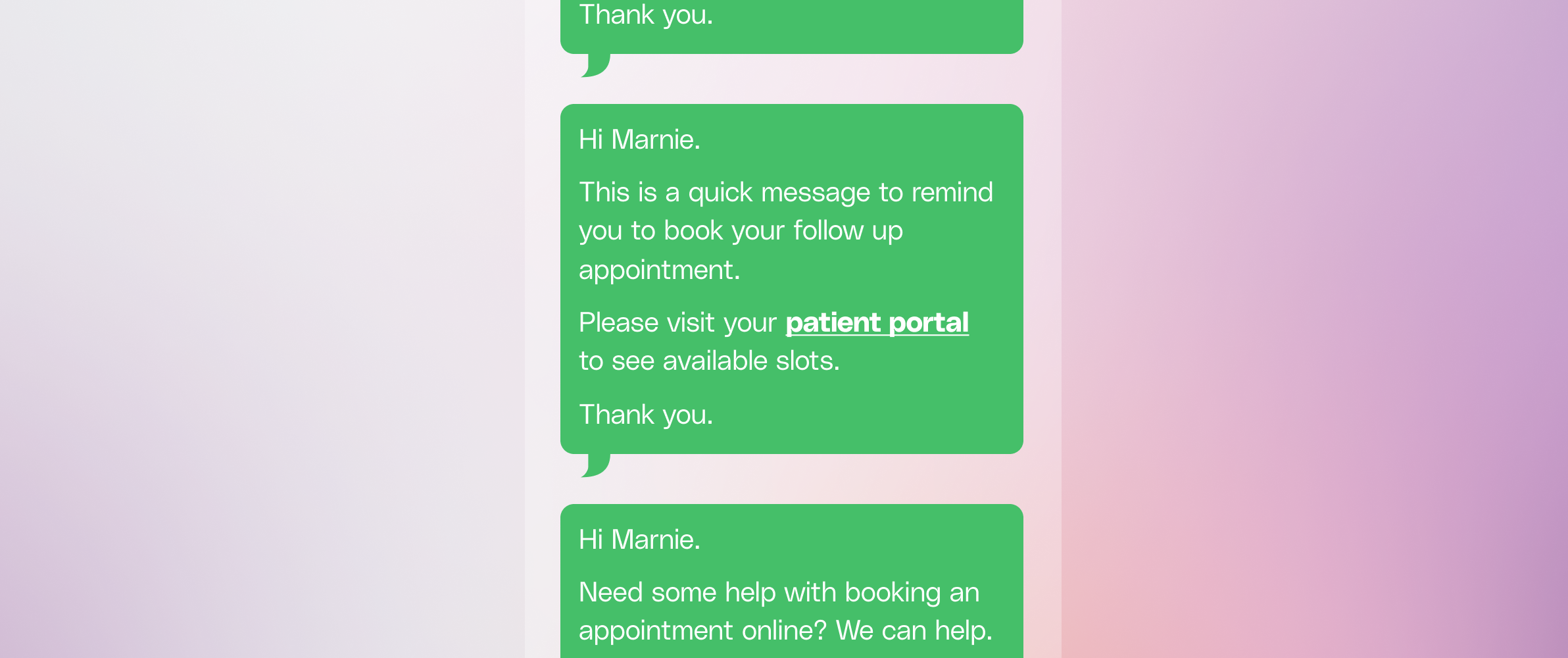
Reminders, confirmations and second attempts run on their own. Anything clinical waits for the professional whose patient it is. We never assess anyone, rank a list or interpret a result.
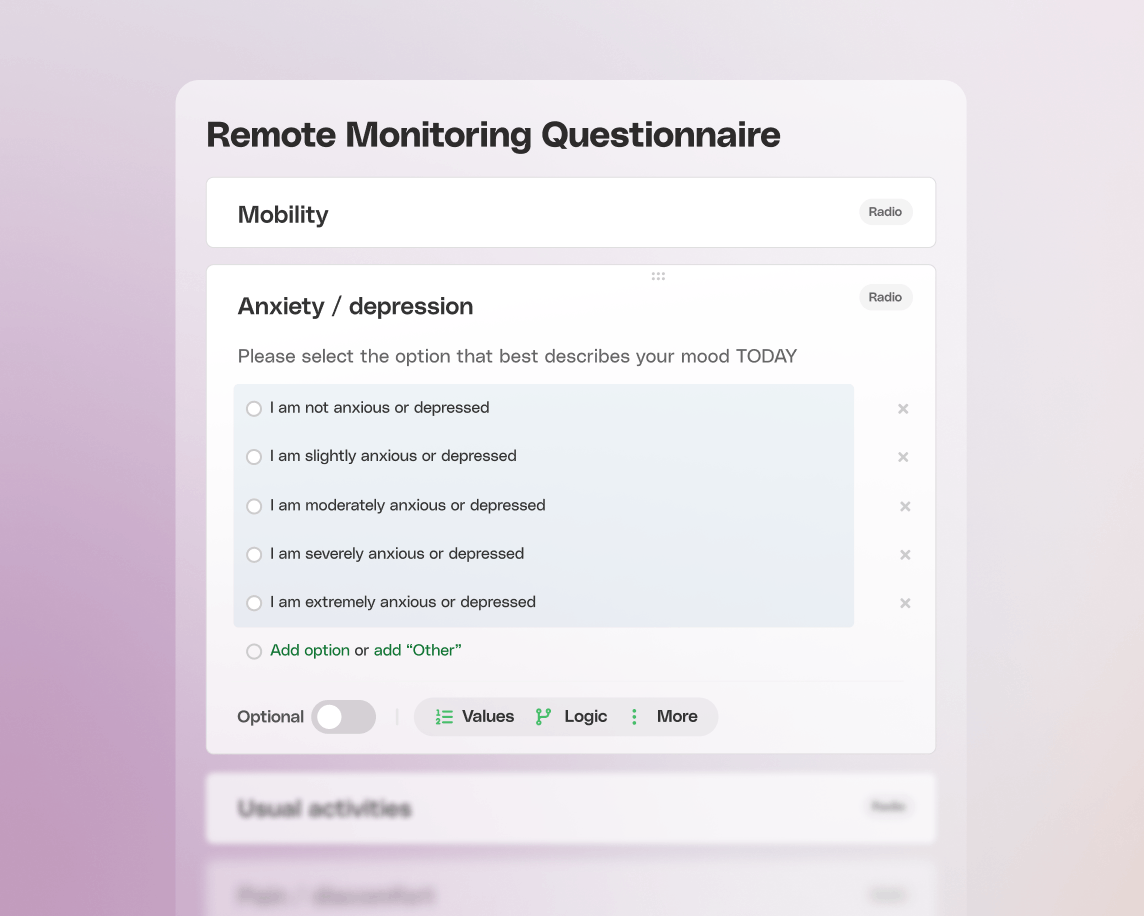
The answers have to reach the record
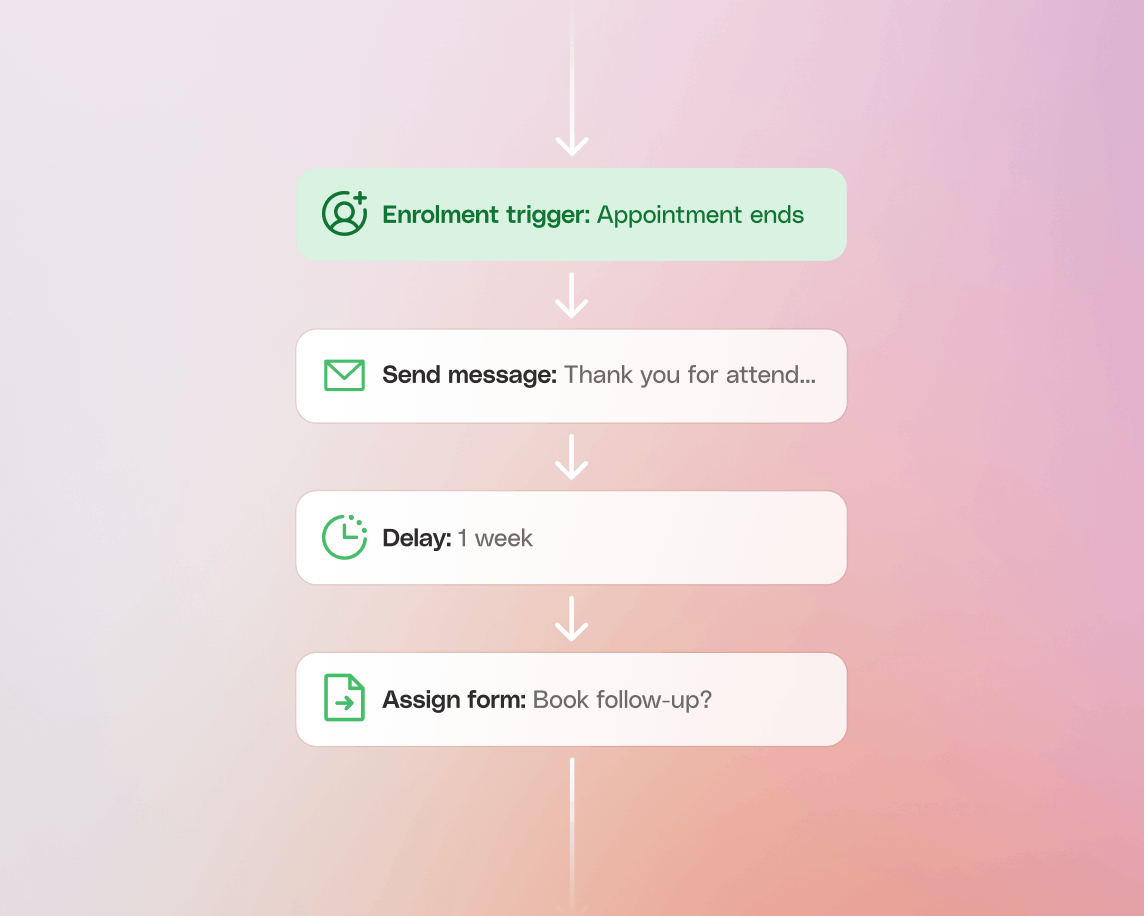
Forms collect history, symptoms or consent before the appointment. Where you are integrated the answers land in the record. A form gathers what a person reports rather than assessing them.
CARE HUB
A result is not always the end
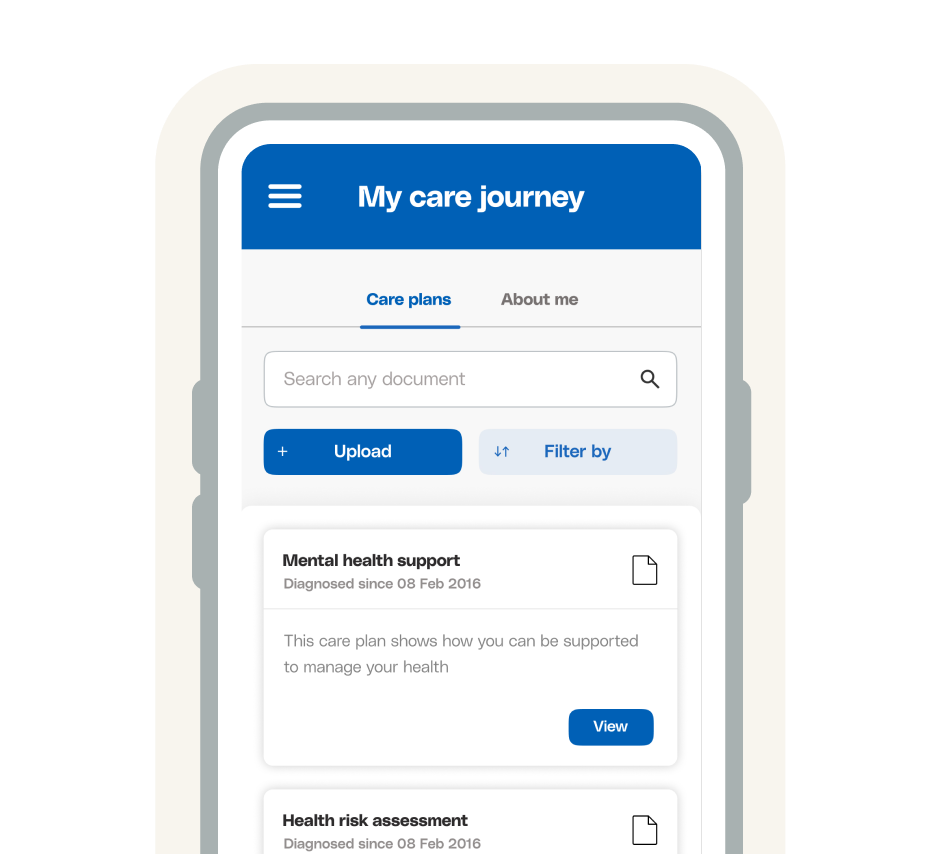
Some people come back for further tests, some go onto a surveillance interval measured in years, and some are handed to a local service and then wait. All of that is time when nobody is due to see them. Care Hub is what you can give them to hold on to.
WHAT THEY WERE TOLD
Care plans, documents and resources
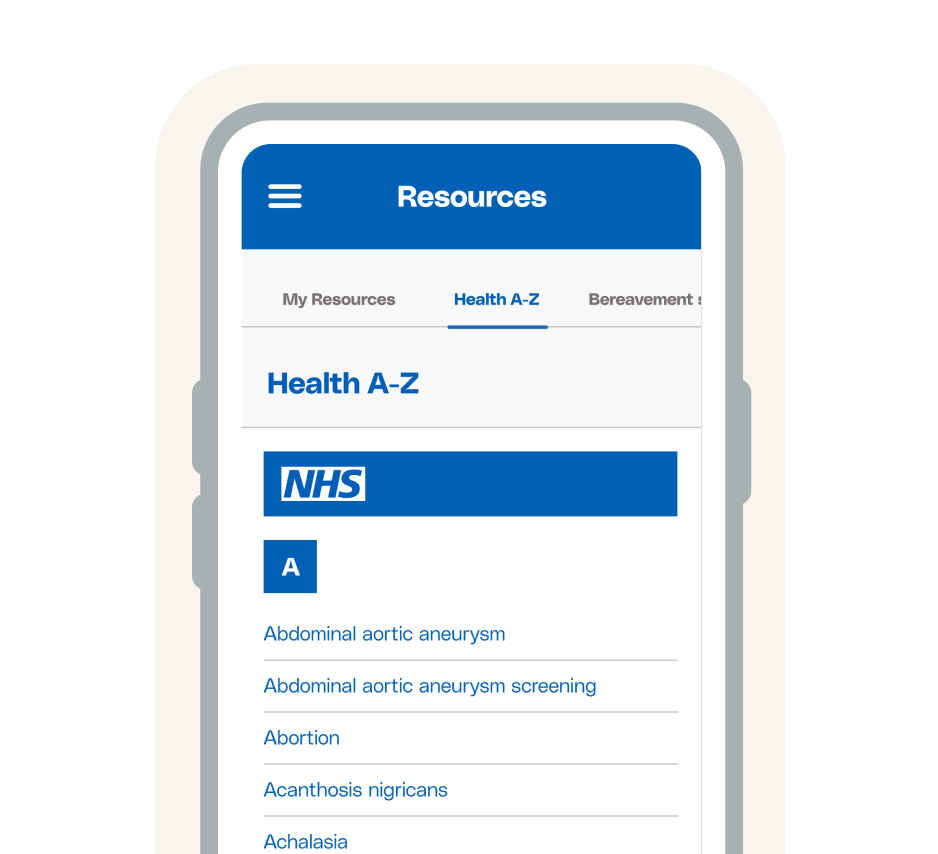
What the person has been told, what happens next, and reading the service has chosen, in one place they open from a text link.
WHAT THEY REPORT
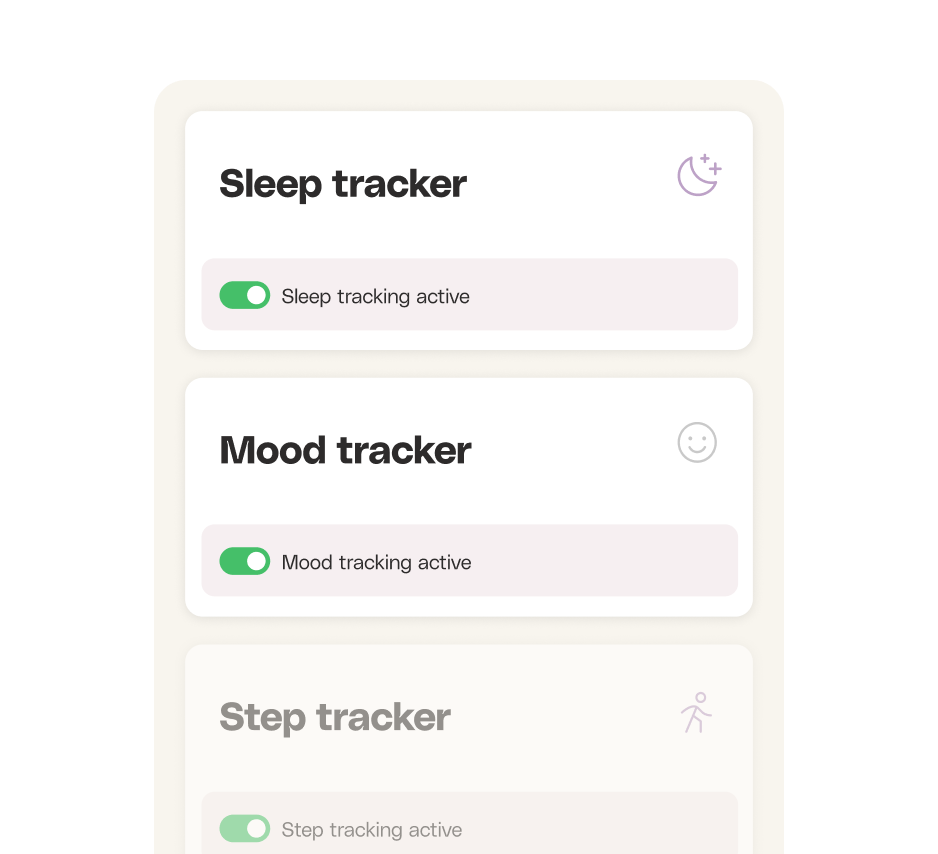
Symptom diaries and trackers
The person records what a service asks them to, and the team holding the pathway sees it. A clinician decides what it means.
RELEASED ON YOUR RULES
Test results, on your terms
Results can be released to the person on your rules about what and when. We never issue one, interpret one or decide who is told.