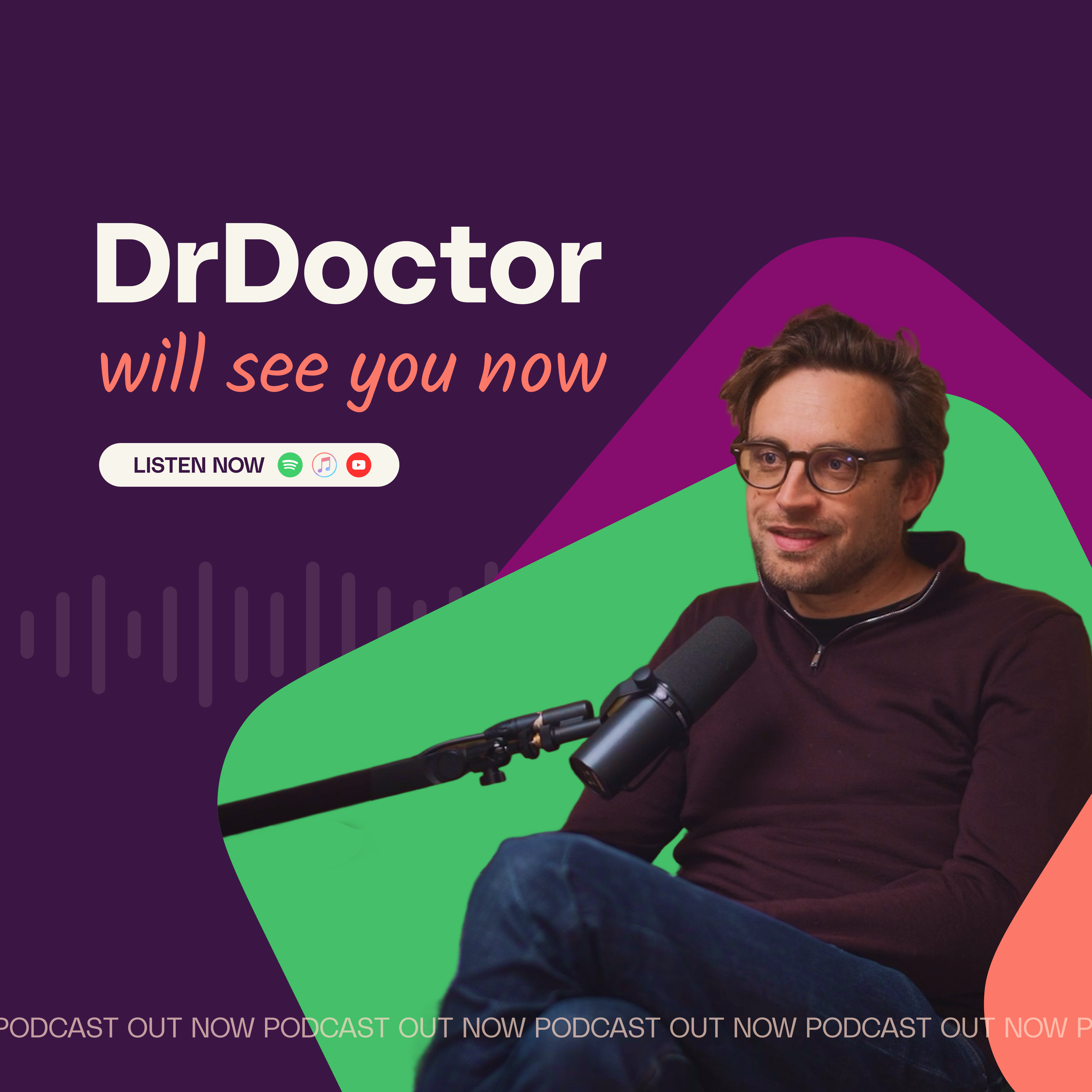
Ian Abbs: There are certain patterns in these very large datasets that humans simply can't see.
Tom: Definitely.
Ian Abbs: It is going to be possible to look at these very large datasets and infer predictable futures from them. So I'm just interested: what are you seeing in some of the data?
Tom: Yeah, I mean, I completely agree with a lot of what you said there. I definitely think that trying to do everything in one big system of record isn't necessarily the right answer. If you look at the way most private companies work, they actually use lots of different tools for different things, because those tools have different specialisms, and they all integrate and work together. That's the critical bit.
I also agree with you on agentic abundance, there's a lot there. Interestingly, I think the framing is: the agents let us make phone calls in and out, and one of the things we've built, and are finding significant market traction for, is simple work that would previously have been done in an outpatient booking centre now being done by an agent. That cuts through a lot of the manual work.
But interestingly, a lot of these activities don't actually require an agent. You can do basic outpatient, preoperative or remote monitoring using relatively old-fashioned technology, like a text message or a website. Where agents become really powerful is helping the people running the service, whether clinical or managerial, identify the person who needs help, and do the predictions.
We've done 160 million NHS episodes on our platform now. We've got billions of rows of data in the dataset, and we're starting to see some genuinely interesting patterns. The first thing we built was AI tools to predict non-attendance in clinic. That's a fascinating product, not just because it's incredibly accurate at looking at real people and predicting how they're likely to behave, but because it starts to let you run dynamic services: dynamically adjusting capacity based on those individuals, the weather, all the things we know happen.
It's actually relatively easy to do the analytics. It's quite simple to build a model that says: when it's raining and I've got a certain cohort of people living in certain postcodes, we know we'll get high DNA rates. The hard bit is actioning that, turning the insight into something used as a day-to-day operational tool.
That feels like the opportunity area to me: giving a general manager an agentic interface where they can use natural language and say "make sure my cardiology clinics are full next month," and it goes and finds the patients and optimises for them. Or a clinician looking after a cohort of patients, say some transplant patients, being able to ask "who's likely to have poor drug adherence, or who's going to need an extra intervention from me," and then reach out to them. Those are the agentic use cases I get genuinely excited about.
When we started DrDoctor, the simple premise was: do some patient engagement, let them do some booking, and that would improve engagement. That always worked, but it was always the foundational layer. It was always the way in to much more robust, exciting clinical change.
I think that's what the next few years look like. We're starting to think about a world where our EHRs and systems of record are well utilised, and the dataset is providing system value, but those EHRs aren't necessarily delivering huge day-to-day benefits to the people on the ground. So we begin to offer that benefit back down: to say to a clinician or an administrator, now that you're using this system, here's an agent that can help you do your job day to day. And why don't we keep the low-value patients at home? They save a trip, and you don't need to see someone who doesn't really need you. Let's bring in the high-value ones and spend longer with them. I think that's our opportunity.
Ian Abbs: Yeah, because I think that's spot on, Tom. If you think about the operating model of healthcare, which is really disease care, it's not that dissimilar from when I started at medical school, or even the descriptions in the books I devoured as a child. We tend to have patients coming to see us on a regular, time-based sequence. They tend to come in with relatively little information transfer before they're seen in a clinic, whether that's a primary care clinic or a hospital clinic.
Very often, if we're honest with ourselves, the value to the patient of that time is relatively low. It's half a day, or a whole day, of work to travel to London, and we're sometimes surprised when a new event occurs, hearing about it for the first time in that visit.
What about a world where we care for people in the world they actually live in, and we only see them when something about them, identified through them or through the data about them, means they're called in at the right time, with information available beforehand that makes the time they spend with a clinician of higher value than they're getting today?
It may be that, as you rightly said, 50% or more of people don't need to be brought in for what's unfortunately termed a "routine" outpatient appointment. I don't think we should use that language, but let's park that for now. The people who are still coming in are fewer, but we're seeing them for longer, and holistically.
Tom: Yes, exactly. For the many complex issues that person might be facing.
Ian Abbs: That just feels instinctively like a better future to me. It's worth remembering that the health and disease system is predominantly a system caring for people in ambulatory situations. They're coming in from the world they're living in, often to see a clinician for a brief period of time.
Tom: We walk through the doors of the hospital and we become a patient.
Ian Abbs: Exactly. Because really, the business of health systems globally is managing that ambulatory care. Inpatient hospital care, whether episodic or unplanned, is actually the minority of the health and care space.
Tom: Yeah, it's predominant.
Ian Abbs: So how could we get to a much better, data-led predictive model in the place where the majority of people actually experience their health and care?
Tom: Yeah, totally. What's so interesting is we've seen these cycles in digital health over the last 20 years, and I don't think we're talking about a new world, actually. We've always been talking about empowered patients, giving people the ability to share more before they come in. I remember, right at the beginning of our journey, learning about diabetes care planning. Remember, I'm an engineer, not a doctor, so I went and got qualified in the Year of Care model to understand it.
The concept there, giving people a chance to think about what's coming, share it in advance with their consultant, and then have a person-focused interaction, is what we're talking about here. The difference now is that technology lets us personalise and scale that experience in a way we never could before, because of the abundance of agentic technology, and proactively reach out to people who need help before they even realise it. What I find so interesting is that the systems thinkers among us have been describing this world for a while, whether it gets delivered through voice agents, a different form of patient engagement, or something we haven't invented yet. The model has actually been static for a while. It's the achievability, scalability and deliverability that has suddenly changed so much.
Ian Abbs: And then I also think, as a clinician, and not that I've ever had to run an outpatient clinic myself, it feels like we're asked to do more and more. Hopefully these tools can take some of that load off, and I think that's one of the big changes too. Some of these tools have only existed for the last couple of years, so it's no surprise we're still exploring how best to use them. I think they can bring benefits to patients, benefits to colleagues working within health services, and ultimately benefits to the resources we use, and therefore to the economics of healthcare.
We've got these large datasets now, and we need to think about how we use them with a focus on three things: better experiences and care for people, better working lives for people within organisations, and better economic benefit. If we keep those three things at the forefront as we develop these futures, I think we'll do well.
I'm very optimistic about the future, Tom. I think this is a fantastic moment, particularly this convergence of the biological revolution and the digital revolution. I often say to people I wish I was 25 years younger, and the less helpful of my friends and colleagues say, "don't you mean 35 years younger, Ian?" So that's a little bit tough.
But I've seen the most incredible changes over many years in my very fortunate career. From a time when, if you had a myocardial infarction, there was nothing you could do, people were put in bed for two weeks and that was about it, to people now having the most incredible technological and pharmacological care, often having a procedure and going home the same day or the next, having had what would once have been a life-threatening cardiac event. We've seen miraculous changes over those years, and certainly in gene therapy too. What would once have been regarded as miraculous, children now having genes repair retinal defects that would otherwise have cost them their sight, restoring it instead.
I think some of what we're seeing from the data revolution, our ability to predict and infer certain types of disease events maybe five, or many, years out, and of course the ultimate goal of being able to intervene in neurological decline, in dementias, are all possible. But it's going to need committed people, both in companies like the one you're running, Tom, and in the health services, to work together to realise that future, because it's only together that we'll get there.
Tom: Yeah, I think that's right, and it's what we learned all those years ago when we started working together. It's working in partnership. Do you know what I find so interesting when you talk about that, Ian? It has been a miraculous period in medicine. We can cure things that must seem, if you had a time machine and travelled forward, like some sort of dark magic. But generally speaking, the equation has been: it costs more. We can cure all sorts of things, but there's a financial cost attached. I think what we've talked about today is the ability for technology, prediction and agentic tools to begin to unwind that spiral and bring the costs down.
Ian Abbs: Well, I completely agree, Tom. I think the future is going to be very much one of precision, prediction and prevention. Yeah, to increase healthspan, the number of years we live healthily, because for people, the ultimate goal is to have the best life possible for as many years as possible. We probably can't change some of the fundamentals of biology, but what we can change is the number of years of life lived well.
We see some shocking disparities in the number of years lived well in different parts of the country, and a lot of that comes down to economic and other inequalities. What we've got to do is use the tools at our disposal to overcome some of those inequalities, and make sure that, to the best of our ability, everyone gets the benefit of the longest healthy years possible, to enjoy life and stay active.
Tom: Yeah, I mean, what more could we ask for, right? I'd certainly take fewer total years, but more active, high-quality ones.
Just to close this out, because I think that's a compelling and exciting thought, that we can do this within a sustainable financial envelope, let's talk a little about the future of the NHS as we start to break down the barriers between providers. That seems to be the conversation at the moment, this concept of neighbourhoods. It certainly makes sense to me that the delineation between primary care, hospital care, community care and mental health is relatively arbitrary, and starting to break it down makes sense. What's your take on that direction of travel? Is it right, and how do we cross over some of the difficult ground?
Ian Abbs: Yeah, I think they're completely arbitrary divisions, Tom. As you rightly say, they're accidents and hostages of history, really.
Tom: Right, yeah, they are.
Ian Abbs: Particularly the division between physical and mental health. A totally artificial division. We now recognise the holistic nature of, and the interactions between, physical and mental health, so often related.
And the artificial divisions between different types of care, primary, community, hospital, different types of hospitals, are also artificial constructs of the way we've articulated a health system. They're not fundamental divisions. So we need to work hard to really scrub away those walls.
Coming back to systems thinking, I hope I've, for many years now, thought about systems of care, so I no longer think about "in-hospitals" and "out-of-hospitals," primary, secondary and tertiary. They're single fields.
Tom: Yeah.
Ian Abbs: And really thinking about the lives and journeys of the people we serve within that single field. It's our job, our duty, to organise services around people, services that offer distinct natures and requirements, but in a way that's seamless to the individual rather than divided.
One of the big things you and I have spoken about before is what you might describe as the value degradation gap that occurs each time we ask a person to cross an interface barrier between different services. I strongly believe there are digital opportunities to make those transfers seamless, and we should be much better at data transfer to give people a seamless passage. But all of those divisions, between mental and physical health, between the different architectures of a health system, were essentially designed and developed in the late Victorian period. That's not the one I think we want to see as we move towards the 22nd century.
We need to be designing a health and care future for the 22nd century now, rather than replicating one from the 19th. I think that's a fantastic opportunity for you and other colleagues at the moment, to really set your navigational course towards the 22nd century.
Tom: Well, what a thought. So to close this out, let's spend two minutes trying to picture that for listeners. We've set a course to the 22nd century. We've got EHR systems running, data flowing, and the innovation has happened. What does that health system look like?
Ian Abbs: A child born into the 22nd century would have some important information known to them, and their families, about them from very early on. For example, the relevant genomic sequencing that would let us know the tractable risks to that individual, the ones we can actually do something about, known quite early because some patterns of later-life disease are set down in childhood, including susceptibility to environmental agents and pollutants, understanding the world of epigenetics and how we can set those early years up for success.
As that child ages, one would always hope, in the most equal society possible, to mitigate the risks of inequality. Inequalities drive a lot of the health outcomes for individuals.
Tom: Yeah, and health has such a great opportunity to drive social mobility, or the inverse.
Ian Abbs: Exactly. As people grow, they'd get care that's tailored for them, much of it coaching around behaviours, both physical and mental, likely to be associated with the best health over time, while understanding that people also have the right to choose. You can coach towards better outcomes for people.
Then, when particular health and disease needs occur, that care is delivered in the right place, at the right time, with the right information, so people get the best outcome they'd wish for, with the best economic use of resources. If that equation is fulfilled, I think it would be sustainable. Then, into later life, with as few complications of the human condition as possible.
Tom: Yeah, and then to have a good death.
Ian Abbs: Yeah. And I don't think it's that much science fantasy to think that some of the tools that would enable that future are already in our hands. So by the 22nd century, Tom, I would strongly believe that type of future is possible.
Tom: Yeah, I do too. I think we have most of the technology already. It all comes back to the people and the change. As we said at the beginning, it's a cultural problem getting these things to happen, and some of it's a societal problem too. I think the philosophy of what the healthcare service is designed to do becomes an important debate here. Do we believe in the ability of good prevention and good health and social care to create social mobility and growth? Or do we end up in a more bimodal outcome, where wealth reinforces wellness? I'm really hopeful it's the former.
Ian Abbs: Yeah, so I completely agree. One thing we haven't touched on today, but I think we did see in the COVID pandemic, was the exceptional amplification of inequalities, the impact of the pandemic falling unequally on the people we serve. So I think that's probably the signal I'd use, the COVID pandemic as a rallying signal for how we design that better future.
Tom: I think that's a fantastic place for us to end on. The opportunity is there. Thank you so much, Ian. It's been, as always, fascinating, interesting, amusing and enlightening in equal measure.
Ian Abbs: Well, Tom, thanks very much. It's been great, and I've really enjoyed our conversation this afternoon.