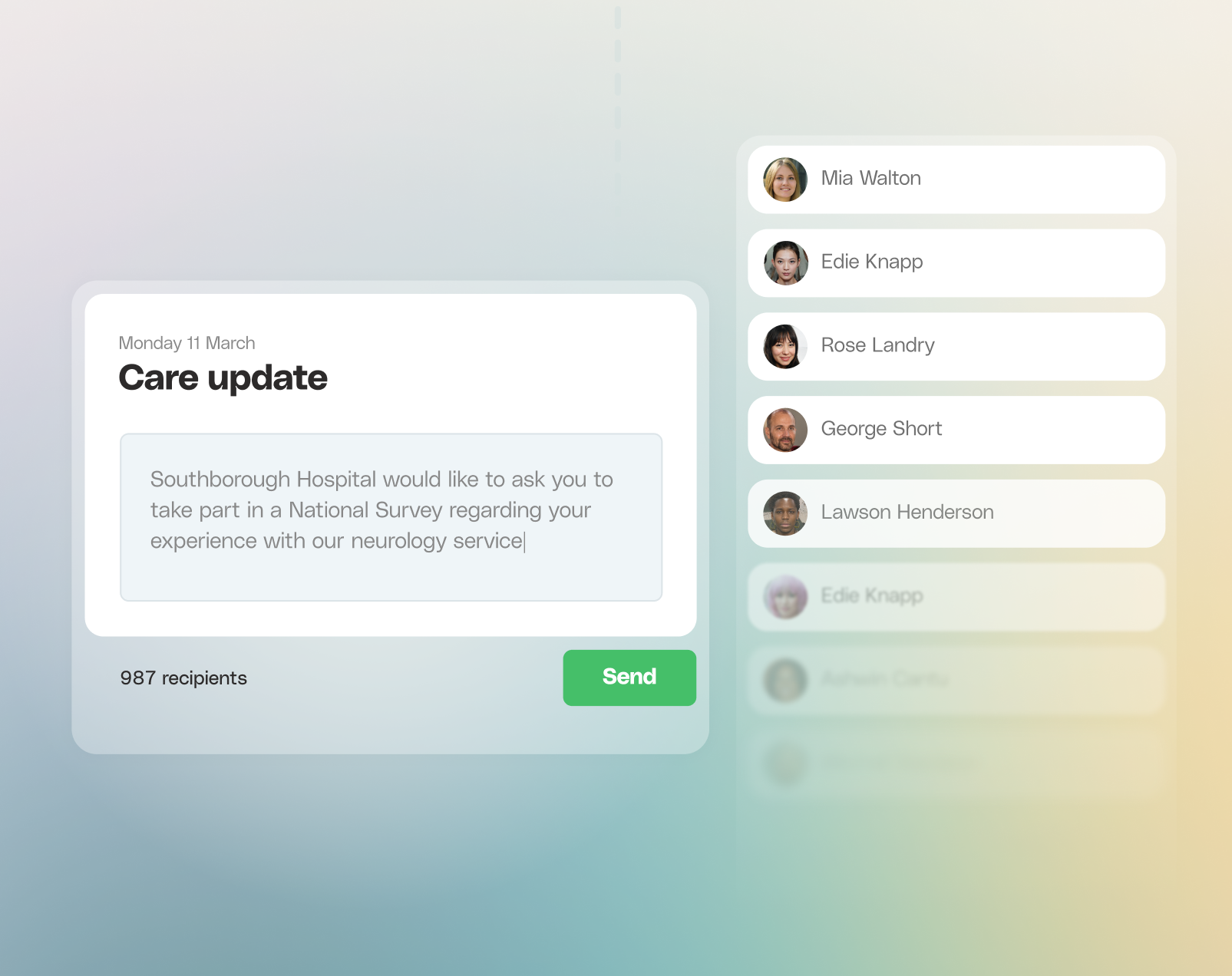
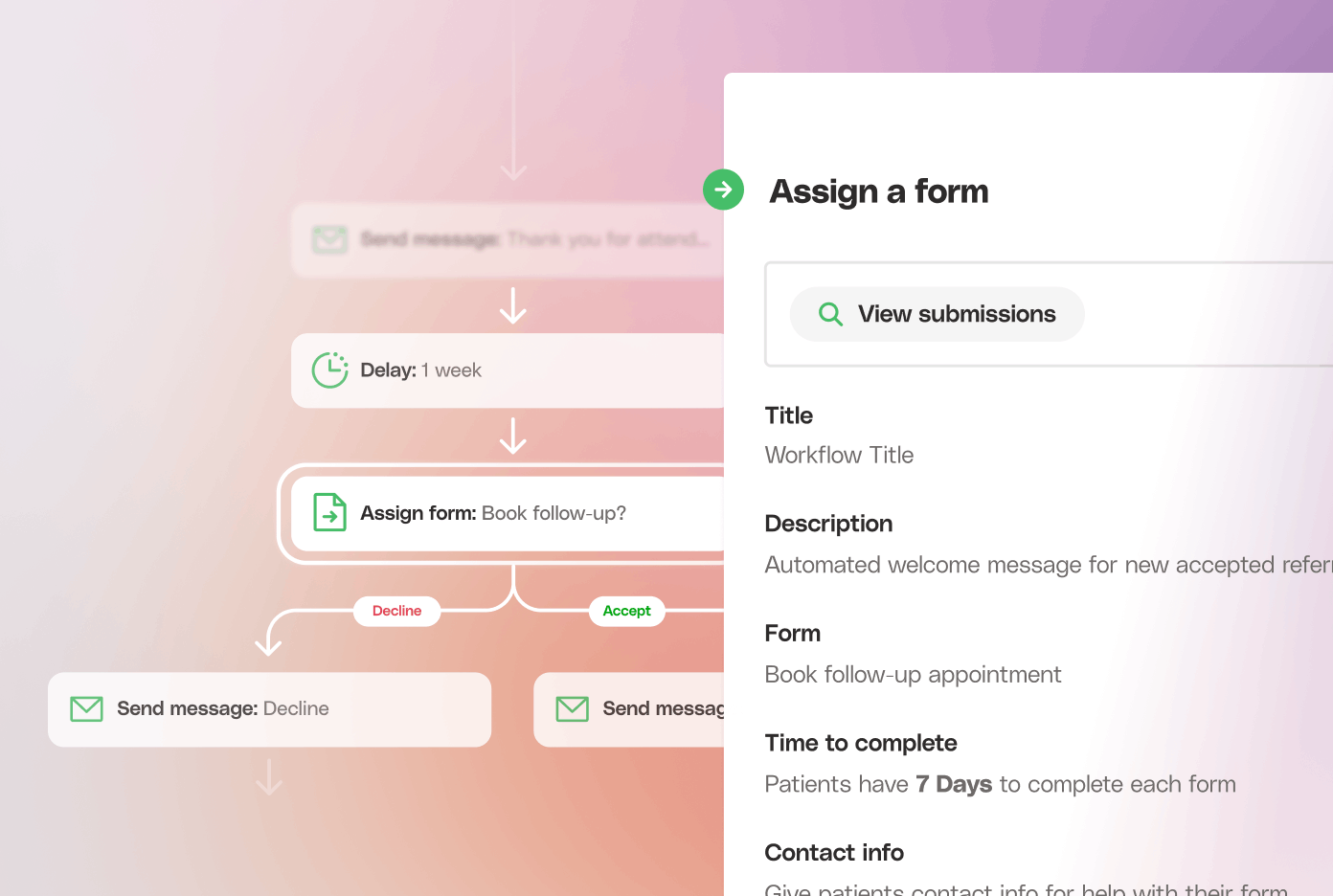
An elective admission gets the least contact and costs the most when it goes wrong. A date arrives by post, and nobody hears it will not work until the day.
Your record system knows who is waiting. It does not tell them
Your record system knows who is waiting, for which operation and when. The contact around that wait is done by hand, mostly by post and telephone.
- No word for months
- Somebody is listed, waits months, and hears nothing until a date arrives in the post.

- Asked on the day
- The questions a service needs answered before the day get asked on the phone, or not at all.

- Home, and silent
- The contact stops at the door, at the point somebody is most likely to ring the ward.

A form gathers what a patient reports
It is not a clinical assessment and never stands in for one. Nothing here scores a patient, ranks a list or rules anyone in or out of a test. Your clinicians do that, against your own criteria.

In the NHS England Online Forms Pilot, January 2024 to February 2026, sixteen NHS trusts engaged 515,829 patients across more than 20 clinical specialities, with more than 30 forms created.
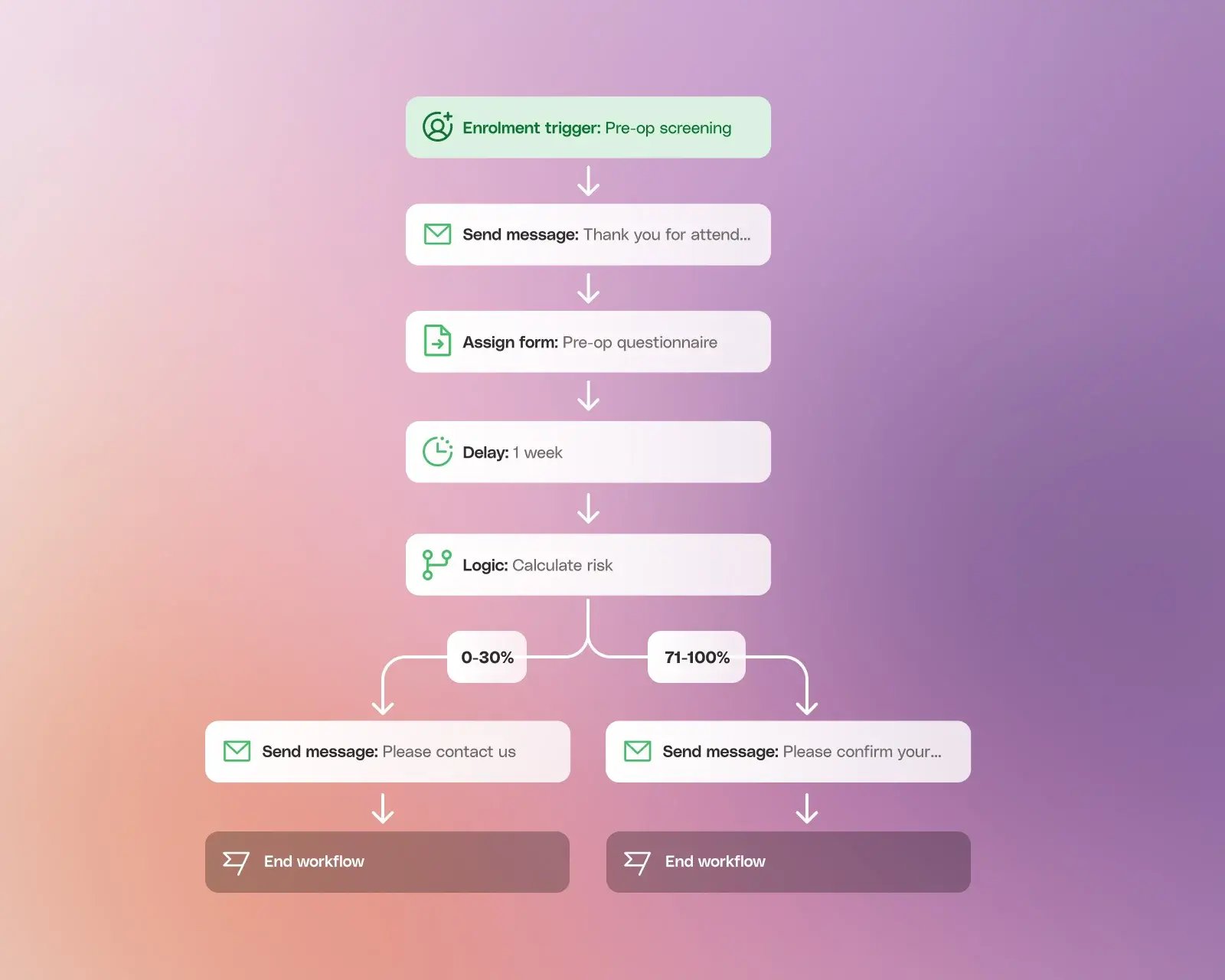
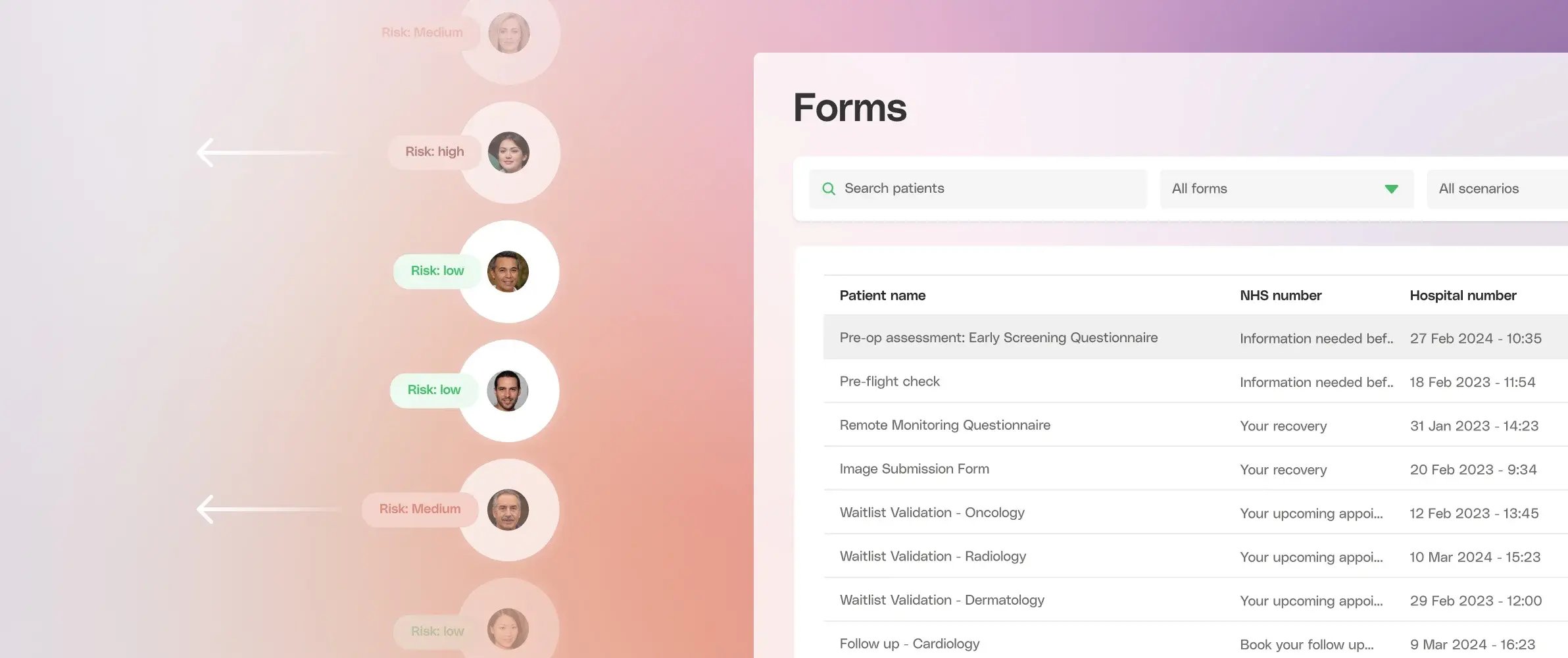
Answers write back
The answers go to the person who reads them and, where the integration supports it, write back as structured data, so nobody rekeys them.
CORE COMMUNICATIONS
The contact your outpatients already get
DrDoctor shows people their admission date, sends the letter and the reminders, takes the confirmations and puts requests to move a date in front of your team.
NOBODY LOSES THEIR PAPER LETTER
Digital Letters
Digital first, reverting to post automatically if it is not opened. Easy Read, large font and Braille go by post, as at Salford Royal.
NO TWO MODALITIES SENT THE SAME
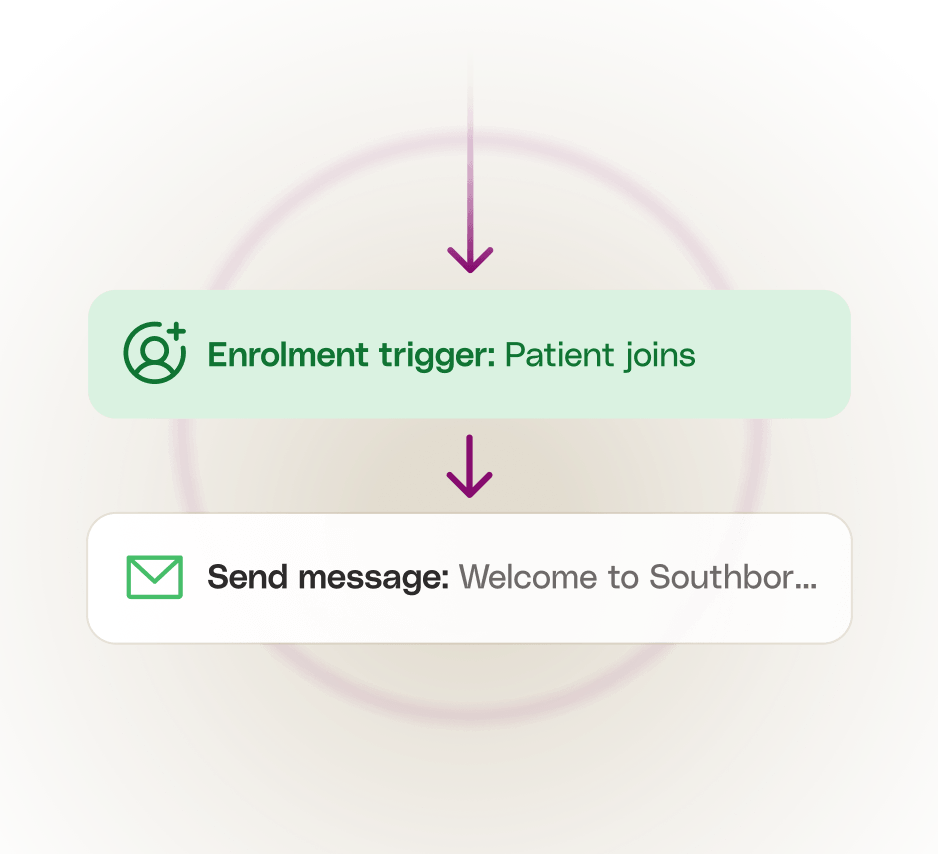
Appointment Notifications
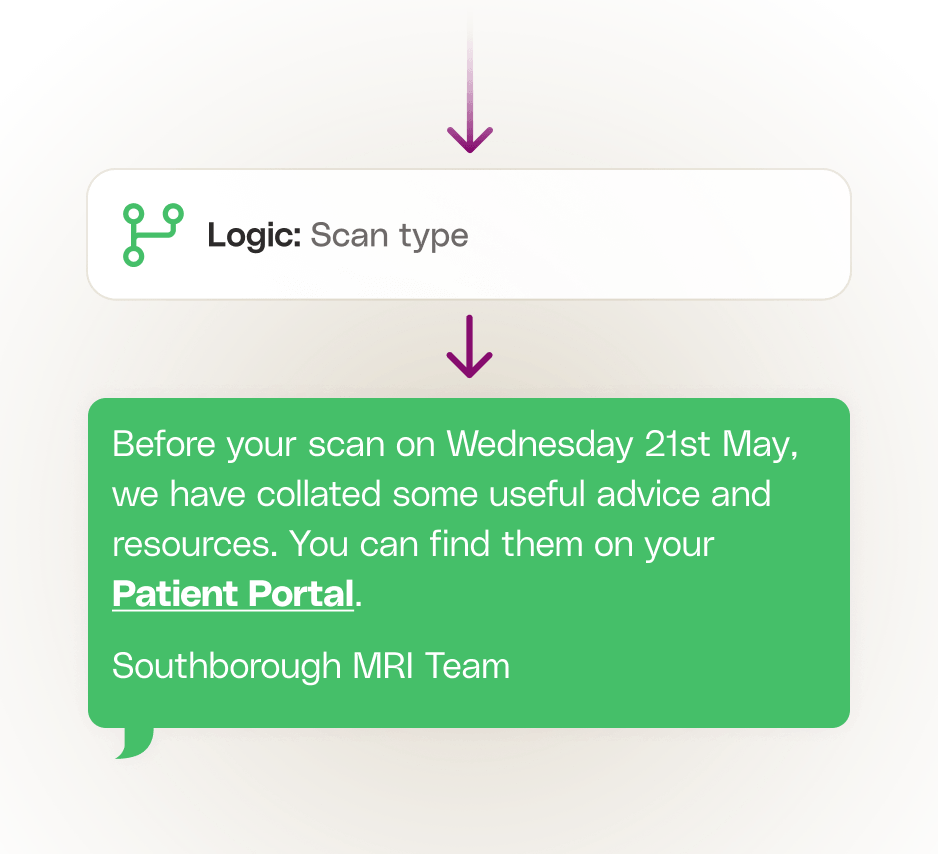
Reminders timed to the admission, so the fasting, medicine and arrival instructions each land when they are useful.
A SHORTER LIST TO RING
Appointment Management
People confirm the date from the message. Your team sees who has, and the chasing narrows to the list that matters before a theatre list.
Contacted right through the wait
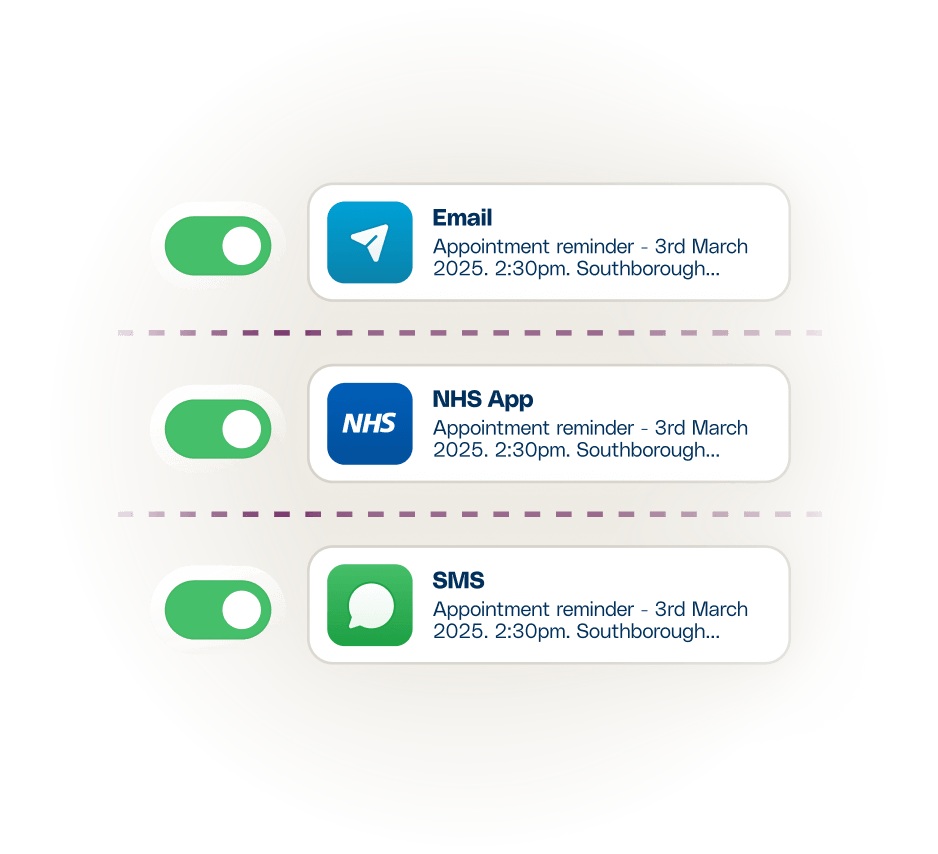
Most of an elective pathway is waiting, and almost none of it is contacted, so the first the service hears is a cancellation. Royal Devon sent questionnaires by text, and the answers wrote back into Epic.
Royal Devon University Healthcare reduced its rheumatology waiting list by contacting people through the wait, with their answers written back into Epic.
APPOINTMENT MANAGEMENT
Give the date back a fortnight out
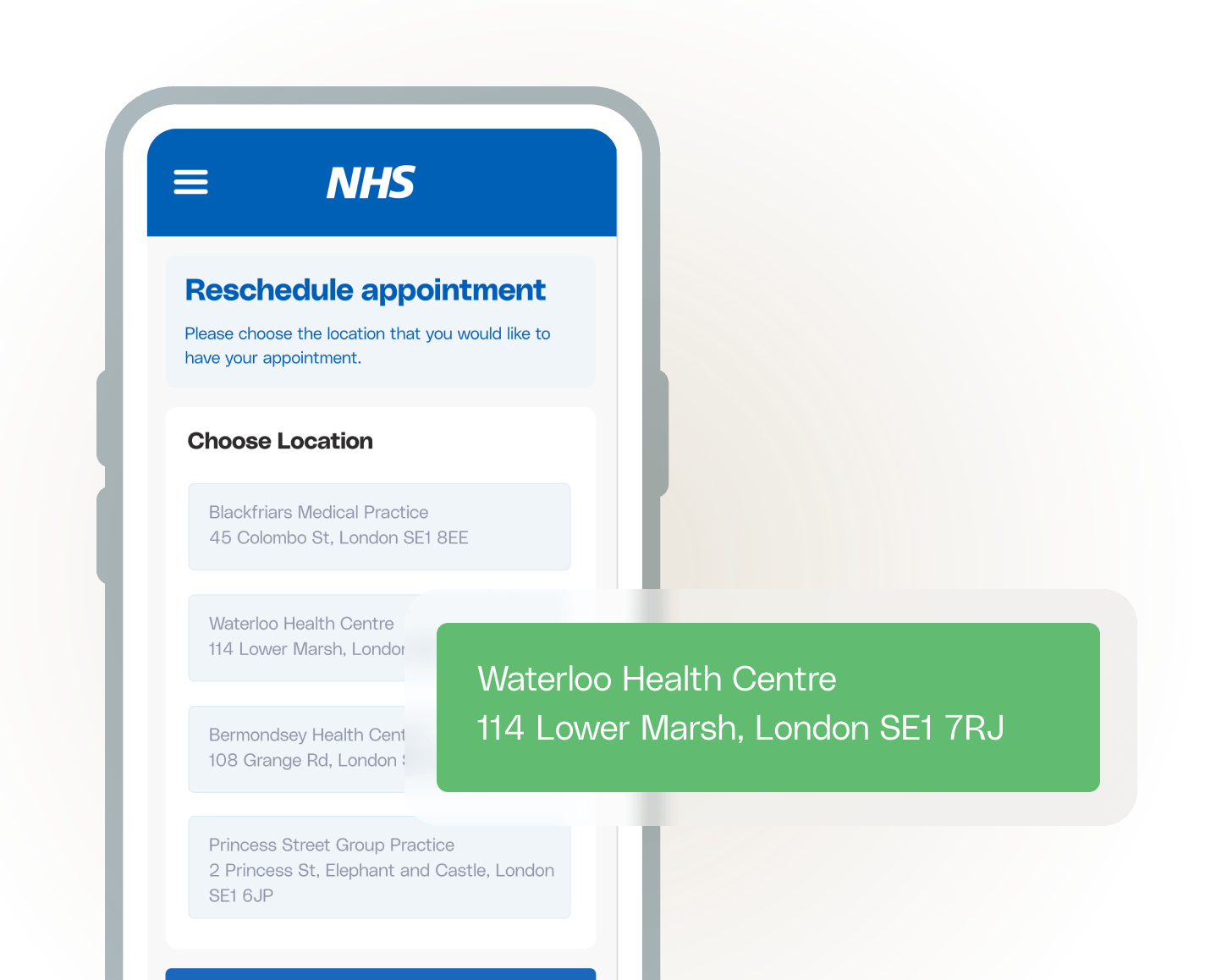
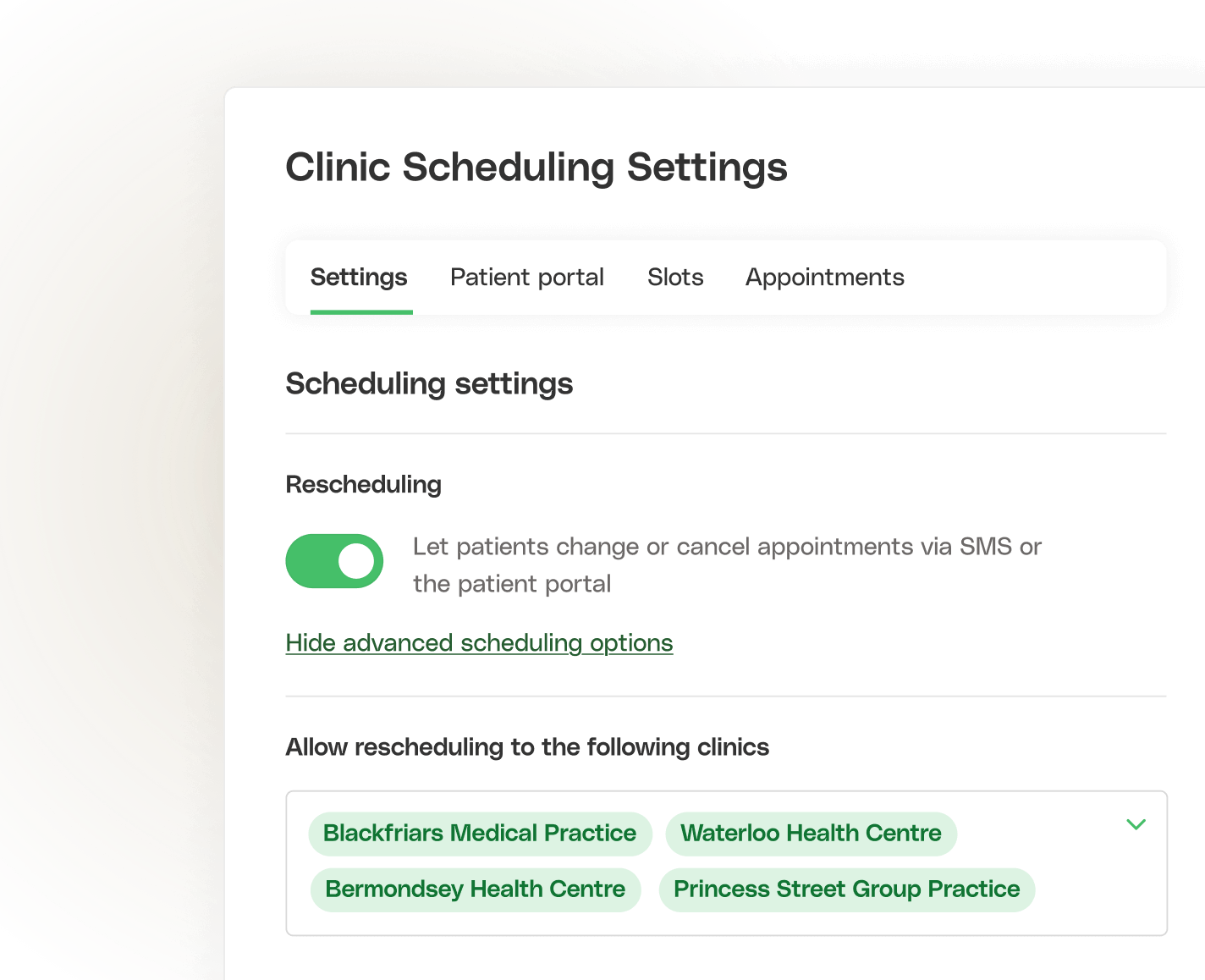
Giving a date back today means getting through on the phone to a team already on the phone. People can ask to change or cancel from the message instead.
NO PHONE CALL TO MAKE
Basic Rescheduling
Requests, changes and cancellations from the message. They write back to the record where the integration supports it, checked before go live.
A WORKLIST, NOT A SPREADSHEET
Exceptions come to you
Automated where it is safe, handed to a person by exception. The clashes and the people who need a conversation stay with your team.
CARE HUB
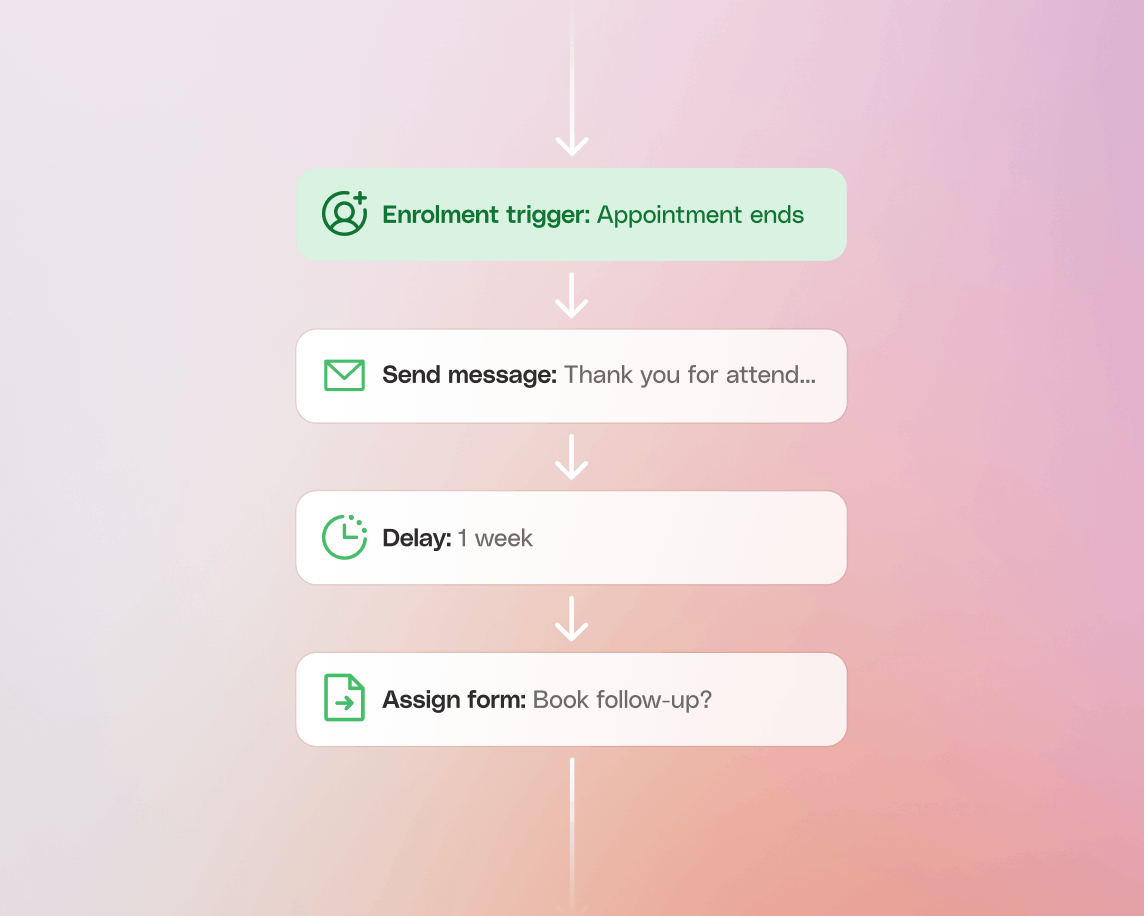
What happens after discharge
The fortnight after an operation is when people worry most and hear least.