Pathway Transformation puts forms and PIFU in place, so patients are seen when they need it rather than when the calendar says. Answers write back where supported.
THE PROBLEM
Booked back in, whether they need it or not
A follow-up booked at a set interval goes ahead whether the patient needs it or not. NHS England asks systems to bring PIFU to at least 5% of outpatient appointments by March 2029. The previous 5% target, for March 2023, ended at 2.5% (Nuffield Trust, 2025).
- Set intervals
- Follow-up dates come from a schedule, not from how the patient is.

- Between visits
- A change in symptoms waits for the next date, unless the patient rings.

- Capacity tied up
- Slots go to patients who are well, while new patients wait longer.

AUTOMATED FORMS
Ask for what the clinic needs before the patient arrives
Automated Forms collect what clinicians need on any pathway. In the NHS England Online Forms Pilot, January 2024 to February 2026, 60% of forms sent were completed.
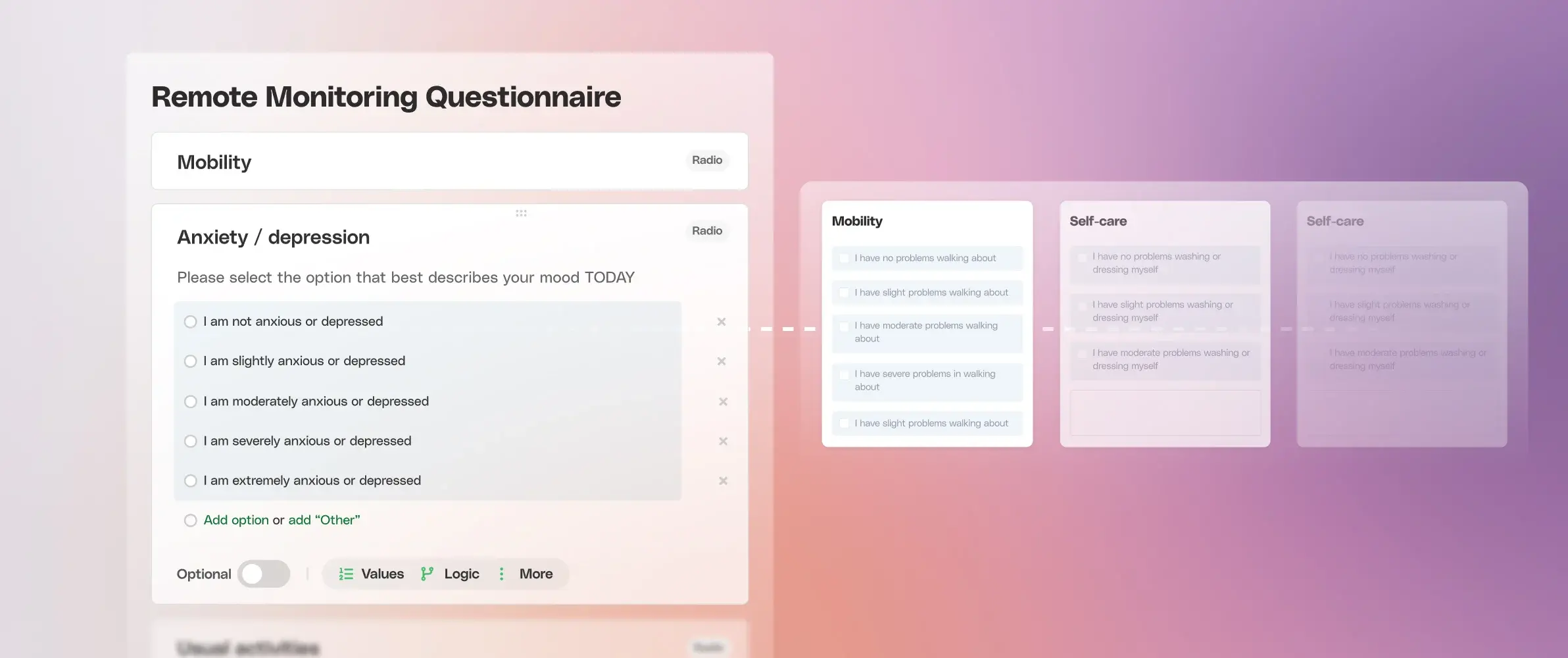
Build once, reuse
Fully customisable and aligned with the NHS design system. Questions can include logic, calculations, clinical coding and images, and be reused across forms.
Send at scale
Send a form to one patient or a whole list. Structured answers and clinical coding write back to your EPR where the integration supports it.
Review in one place
Clinicians review every response in the Staff Platform and use it to decide who needs to be seen, and when.
ADVANCED AUTOMATED FORMS
Sent at set points in the pathway
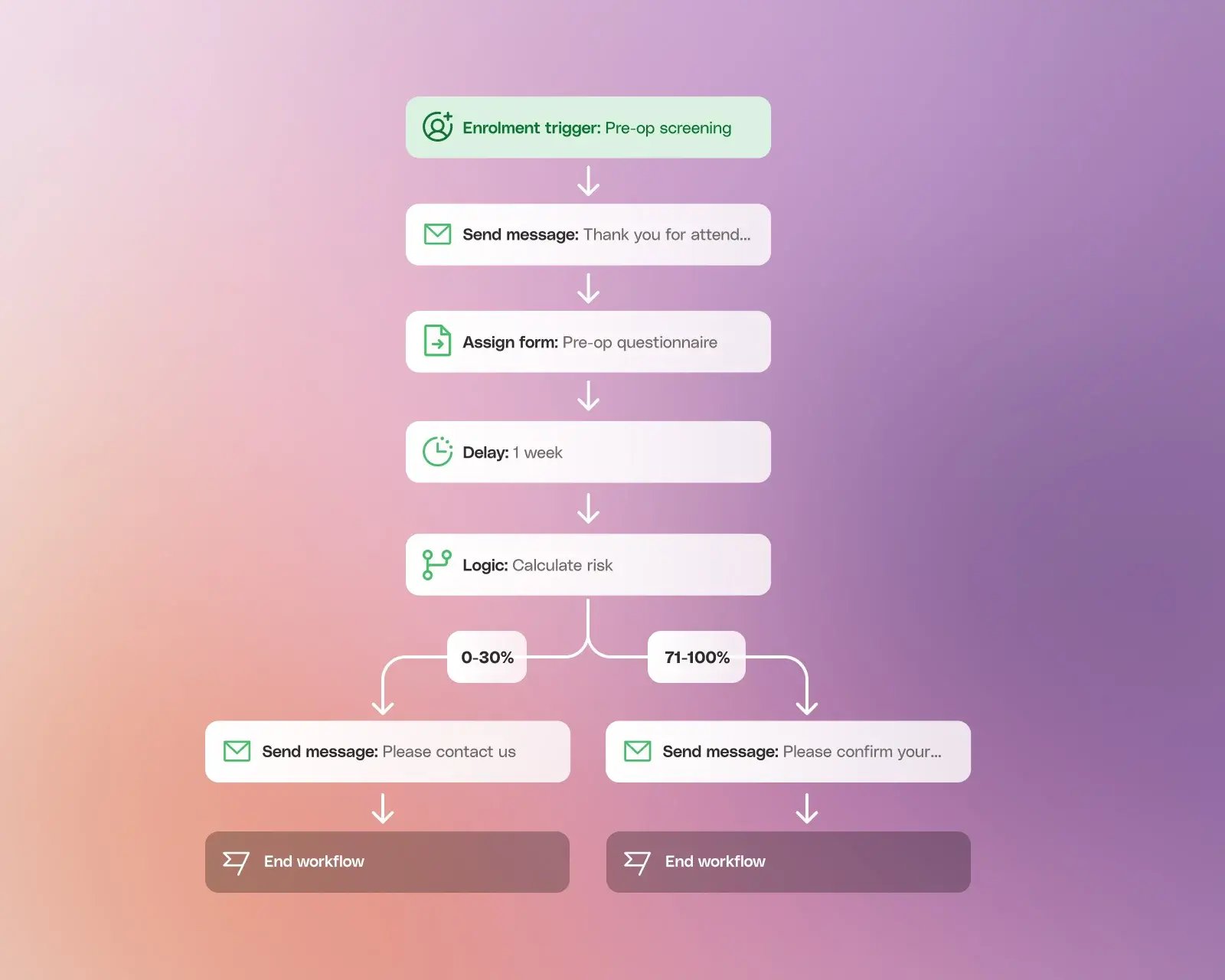
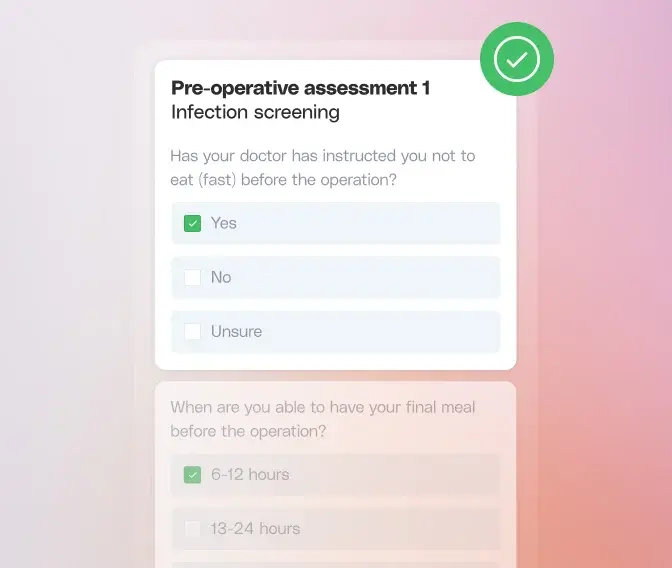
For PROMs, PREMs, pre-op screening or post-op tracking, branching logic and triggers send each form at set points in the pathway. Structured answers write back to EPR fields over HL7 and FHIR where the integration supports it.
At Royal Devon University Healthcare, rheumatology questionnaire answers fed back into Epic in real time, so the waiting list updated as they landed.
PATIENT INITIATED FOLLOW-UP
Follow-up when patients need it
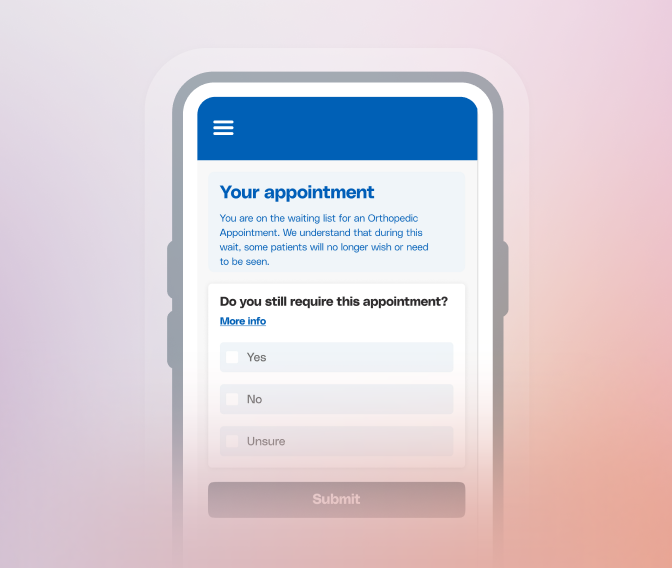
Patients stay on the service's list until they need to be seen. DrDoctor has implemented over 1,000 live PIFU services with NHS trusts, safely releasing over 82% of previously committed clinical capacity.
PIFU RULES
PIFU rules are set once, then run on their own
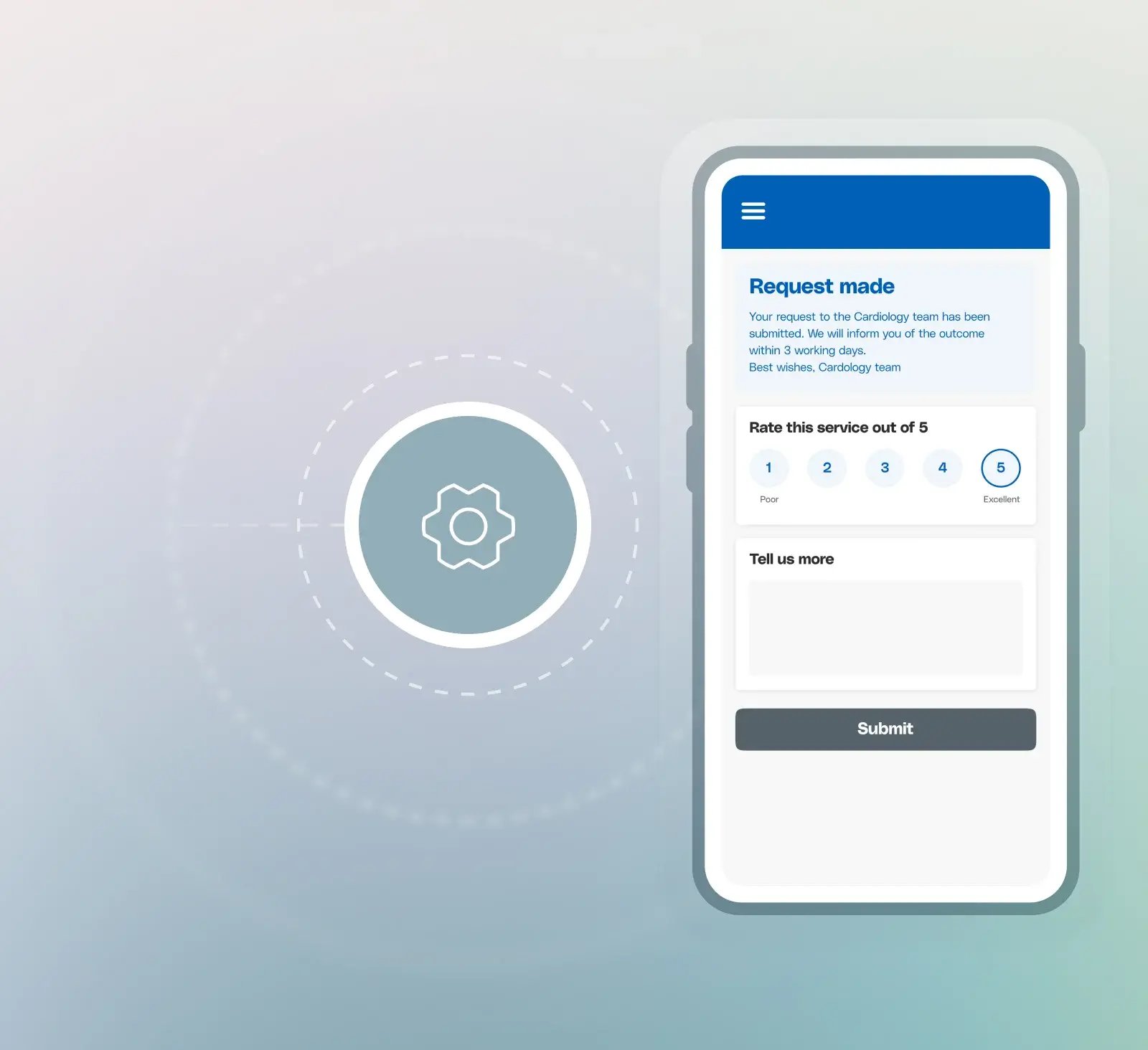
Patients request a follow-up when they feel they need it, rather than being booked in just in case. They stay supported, and you protect capacity.
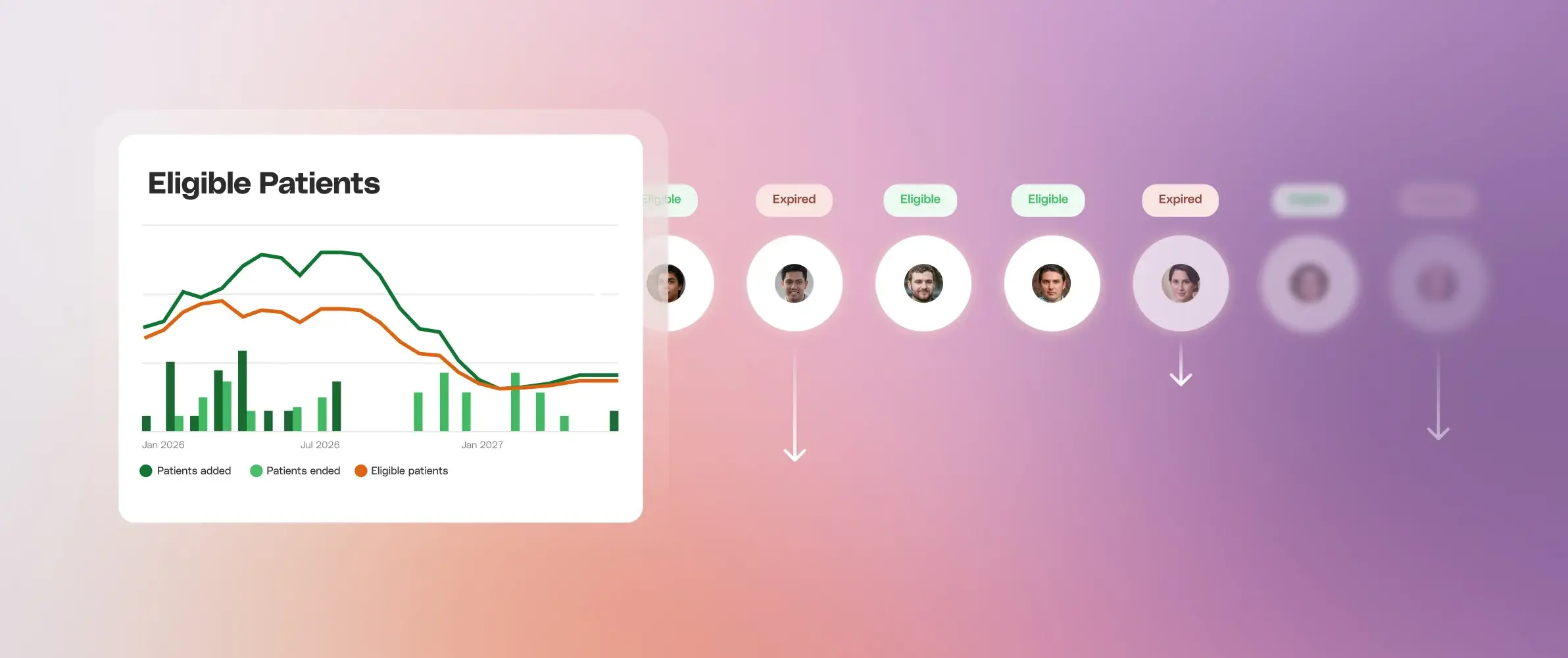
Flexible eligibility lists
Only patients placed on PIFU can send a request. Eligibility runs for a set period, then closes automatically.
Specialty-specific request rules
Set how many requests a patient can make, based on what the patient and the specialty need.
Quick to review
At Nottingham oncology in 2019, a digital appointment took four minutes on average to review and outcome.
PIFU REQUESTS
Requests land in the systems your team already uses
PIFU requests do not need a separate inbox. Our API surfaces and manages them in third-party systems, such as your PTL tool, so admin and booking teams work them in the tools they already use.
PATHWAY TRANSFORMATION PRO
Patient data triggers the next step
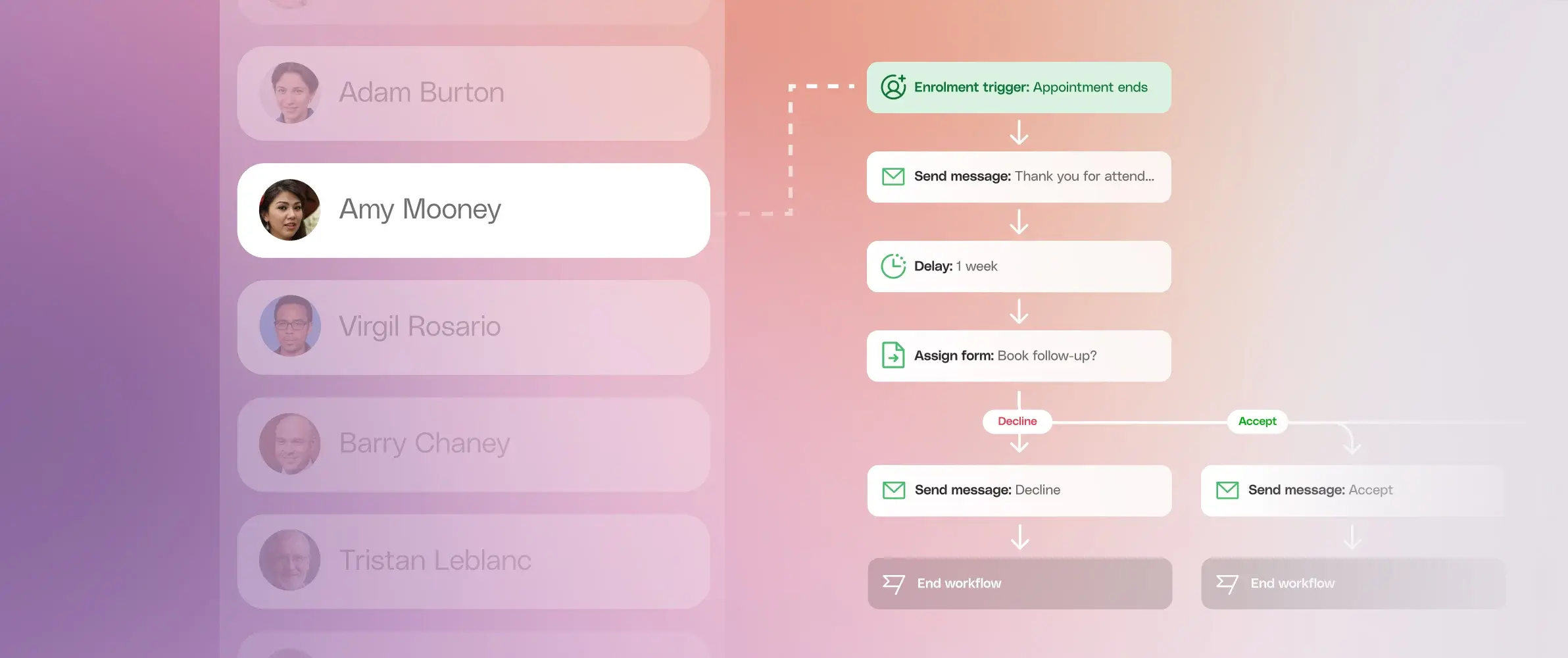
The Pathways Engine in Pathway Transformation Pro turns patient data into the next step, from a booking invitation to a review request. Anything clinical waits for a clinician, and your EPR stays as the record.
Follow-up triggers
Use form responses or other patient data to trigger the next follow-up step, so nobody has to track each response by hand.
Customised branching logic
Set timelines, delays and branching logic that fit your team structure, and send automated reminders and tailored messages.
Monitor, refine and scale
Enrol a patient list and see where each patient is at every step. Start with one cohort, see the data, then go wider.
HUMANS IN THE LOOP
Every pathway decision that needs a clinician gets one
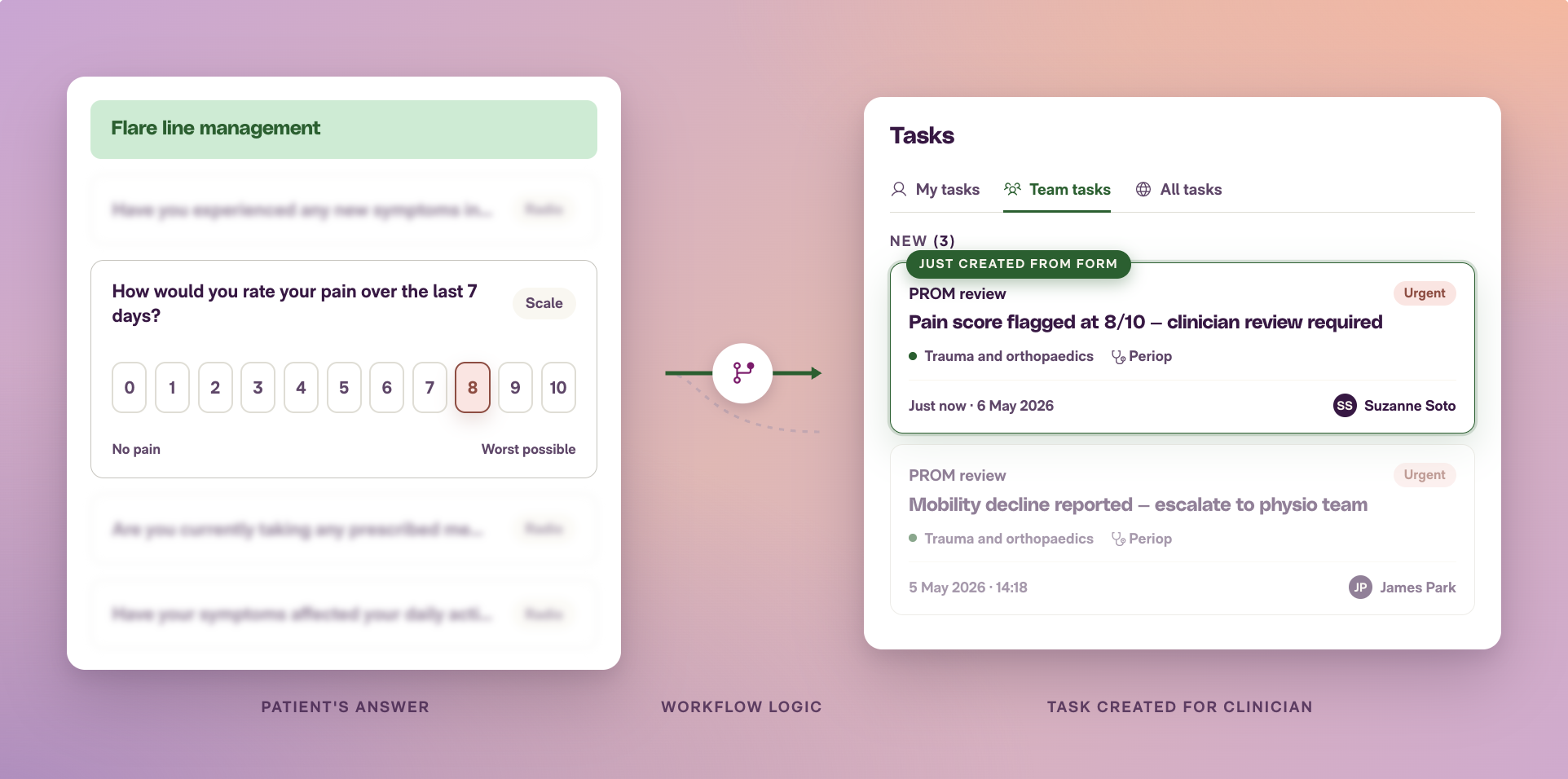
When a patient response needs a review, such as a flagged score or an unexpected answer, a task goes to the clinician who holds the pathway, with the patient's responses attached.
PREP & MONITOR
Trusts change their pathways one step at a time
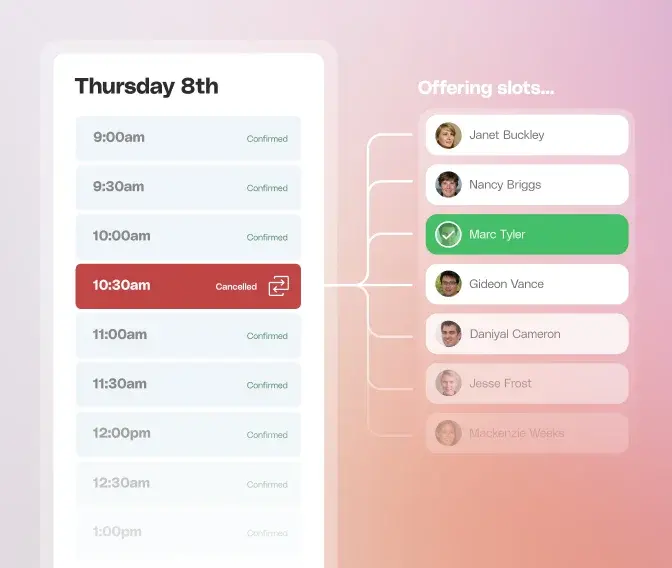
Start with forms and PIFU, then let patient data drive the next step. Pick the pathway, prove it with one service, then go wider.
Pathway Transformation Pro
Unlocks the Pathways Engine: patient data triggers the next step in the pathway automatically, with humans in the loop.
Clinical Pathways
Specialty pathways from pre-assessment to follow-up, automated at scale, with no clinical action taken without review.
Care Hub
A personal health record on top of engagement: care plans, symptom tracking, mood diaries and trusted resources in one place.